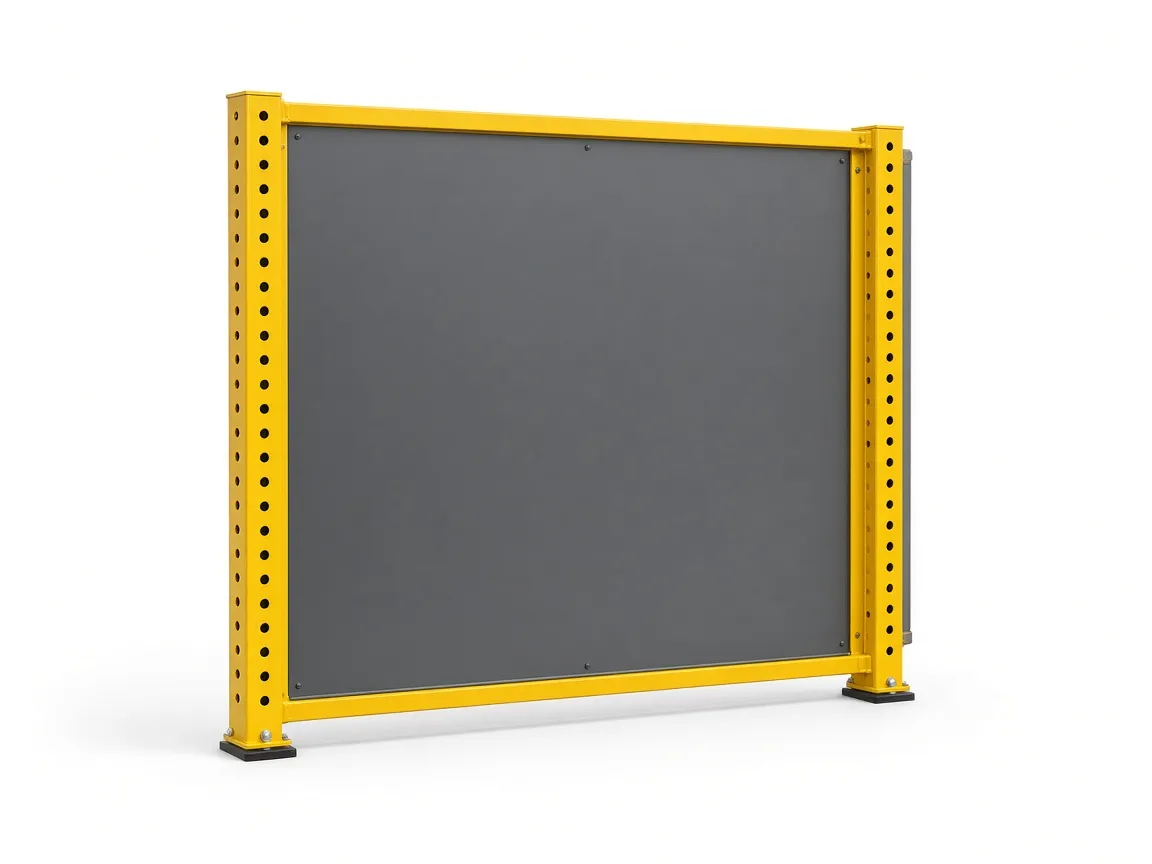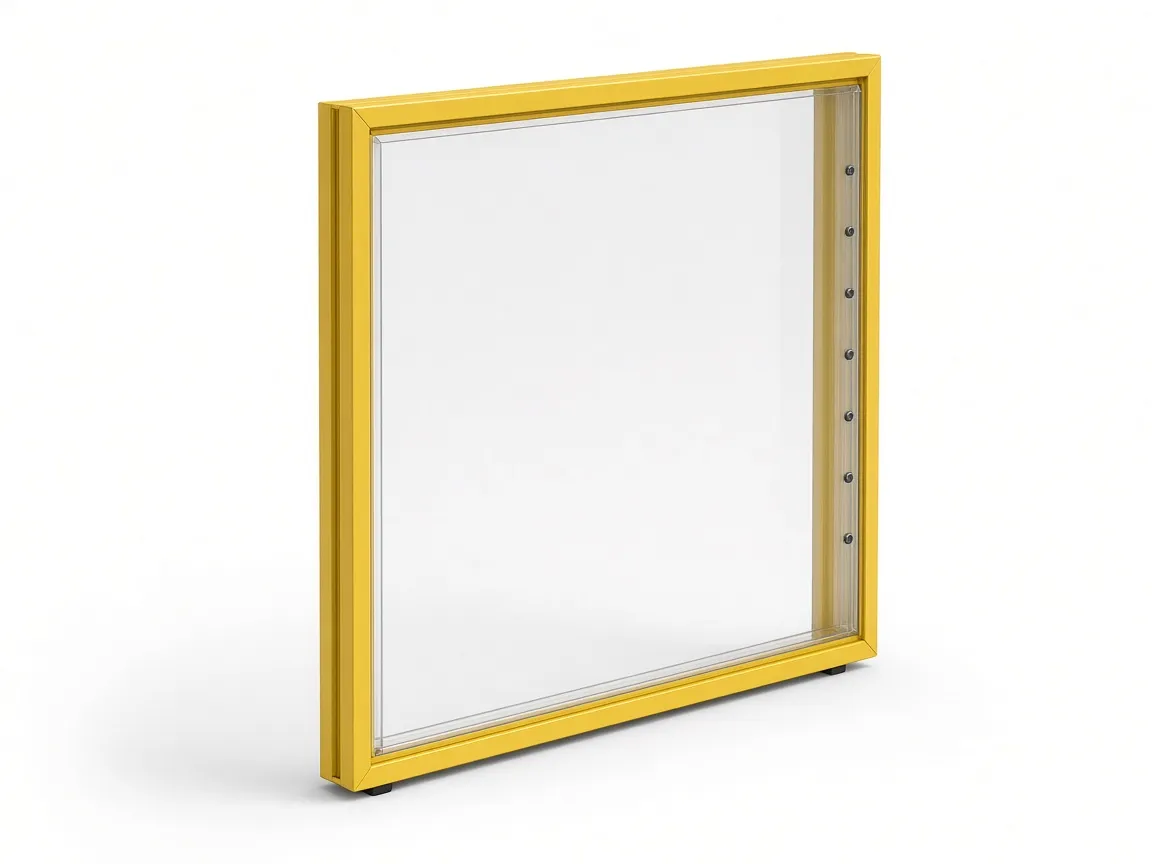
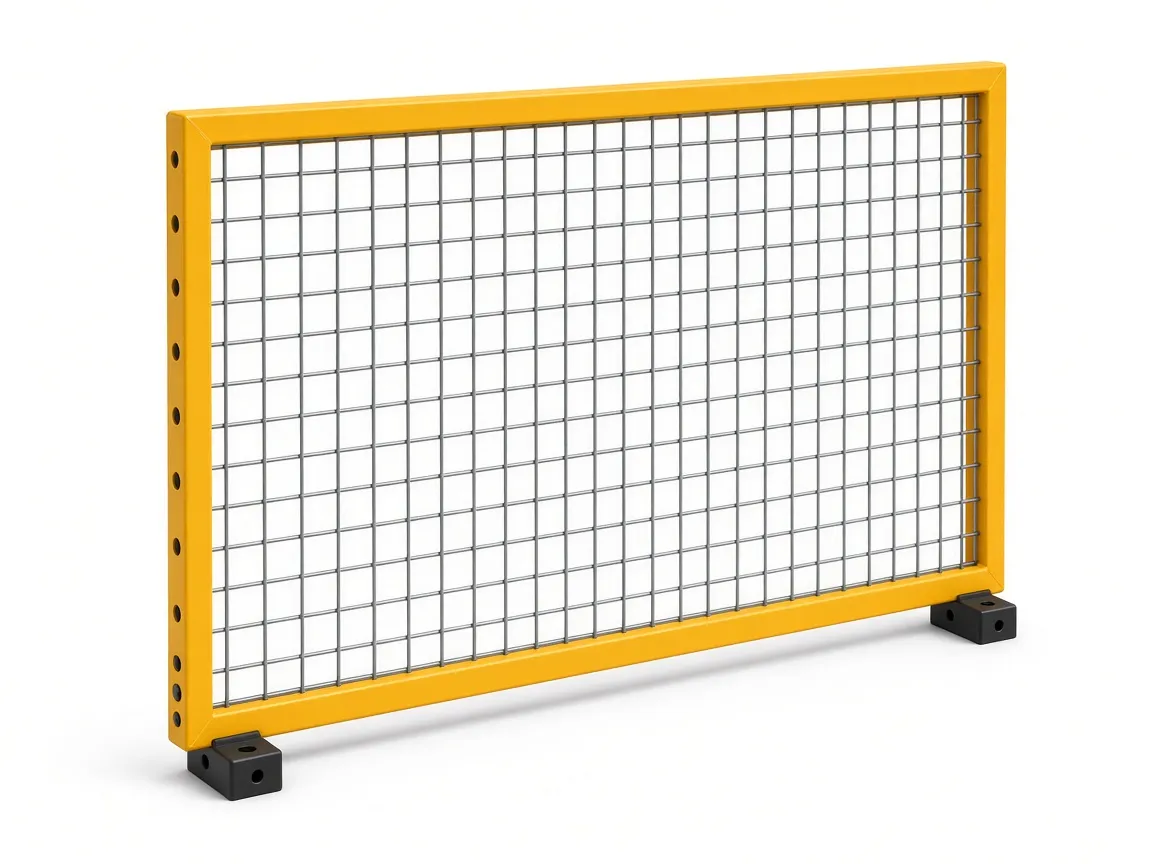
For conveyor lines, wire mesh machine guarding is usually the best perimeter choice when you need visibility, airflow, and frequent inspection access. It is not the right fit everywhere, though. The best decision depends on reach-in risk, product fallout, dust or splash, and how often operators or maintenance need access through gates.
Why conveyor lines are a special guarding problem
Conveyor systems create long, linear mechanical hazards that run through entire production areas. Unlike a compact machine, a conveyor line can expose people to moving parts for tens of feet at a time. The hazards are often concentrated at infeed points, discharge points, nip points, transfer stations, accumulation zones, drive units, and maintenance access areas.
That is why a conveyor guarding layout should start with a documented risk assessment by a qualified person. The goal is not to pick a panel material first. The goal is to identify where people can reach, where product can fall or splash, and where maintenance tasks require entry. A good way to structure that review is our machine guarding risk assessment checklist for new lines.
When wire mesh machine guarding is the right choice
Best-fit use cases
Wire mesh works well on conveyor perimeters when you need to watch the process without opening gates. It is a strong fit for packaging lines, assembly conveyors, sortation systems, and general material handling where the main need is separation from moving equipment, not full containment of dust, coolant, or spatter.
On these lines, visibility matters. Operators need to see whether product is tracking correctly, whether a carton has tipped, or whether a jam is beginning to form. Mesh panels support that kind of monitoring better than opaque barriers.
Benefits specific to conveyors
Wire mesh gives you a clear view of long runs, transfer points, and downstream accumulation. It also preserves airflow and lets plant lighting reach the line. That makes it easier to inspect and easier to maintain than a solid barrier in many conveyor applications.
For a long perimeter around a conveyor, mesh is often the simplest way to balance access and protection. It allows a technician to look for a misaligned belt or a fallen part without removing panels. It can also reduce the need for extra lighting inside the guarded area.
Where wire mesh is not the best choice
Mesh is not the right default if the conveyor process creates fine dust, metal chips, coolant, washdown spray, or other debris that should stay inside the guarded area. It is also not ideal if you need to hide the process from view, or if the product itself is small enough to pass through openings and become a secondary hazard outside the fence.
In those cases, a solid barrier or a clear panel can be a better fit. If you are weighing those options, see Wire Mesh vs Polycarbonate vs Sheet Metal Machine Guards and How to Choose a Machine Guarding Fence Material.
Wire mesh versus sheet metal versus polycarbonate for conveyor guarding
Conveyor lines often need more than one panel type. A straight packaging run may work well with mesh, while a discharge area with splash or chips may need a different material. A mixed-material layout is usually better than forcing one panel type everywhere.
| Application need | Wire mesh | Sheet metal | Polycarbonate |
|---|---|---|---|
| Visibility | High; easy to watch belts, transfers, and flow | None; blocks line of sight | High; keeps the process visible |
| Airflow and lighting | Excellent; open construction supports both | Blocked; can create darker, hotter areas | Allows light through, but not airflow |
| Debris and splash control | Poor for dust, chips, coolant, and spray | Good for chips, spatter, and washdown zones | Good for splash and small parts where visibility still matters |
| Typical conveyor use | General perimeters, visible transfer lines, inspection-friendly areas | Dirty discharge zones, welding transfer areas, spatter-prone sections | Clean but splash-prone areas, or zones where operators must see inside |
If you are still deciding between panel types, our product pages can help you compare the options: Wire Mesh Panels (D Series), Sheet Metal Panels (SM Series), and Polycarbonate Panels (PC Series). For a conveyor-specific application view, see Conveyor Guarding.
What to specify for mesh openings, height, and panel layout
Opening size and reach-through risk
When you specify wire mesh, the opening size must be evaluated together with the safety distance to the hazard. A smaller opening does not replace proper guard placement. The key question is whether a hand, arm, or tool can still reach a moving part from the outside.
Standards such as ISO 13857 address reach distances, while ISO 12100 covers risk assessment and ISO 14120 addresses general requirements for guards. Check the current edition of each standard for your application before finalizing the design. OSHA 29 CFR 1910.212 also remains a core U.S. reference for general machine guarding.
Panel height and layout strategy
Height should match the hazard and the access pattern, not a fixed preference. On conveyor systems, taller barriers may be needed where someone could lean over the fence to clear a jam or reach a moving transfer. In other areas, a lower guard may be acceptable if the hazard is farther away and the risk assessment supports it.
Layout matters just as much as height. Try to align panel widths with conveyor modules, structural columns, and maintenance aisles. That reduces field cutting and makes the line easier to service. A modular layout also helps you expand later if the conveyor line grows. For practical layout steps, see Machine Guarding Fence Layout Checklist for U.S. Plants and Modular Machine Guarding System: How to Build a Layout That Scales.
Access planning for conveyor lines
A conveyor line is only as usable as its access points. If people cannot reach the belt safely for cleaning, adjustment, or jam clearing, they will eventually look for shortcuts. The better approach is to place gates where the work actually happens.
What should have a gate
- Jam-clearing points: place a gate where a technician may need to enter to remove fallen product or clear a blockage.
- Sensor and adjustment zones: add access where guides, photoeyes, or detection devices require regular setup.
- Drive and take-up areas: provide access where maintenance is routine and hazards are concentrated.
- Transfer and merge stations: allow access where changeovers, inspections, or troubleshooting are common.
- Forklift or pallet openings: use wide gates only where material flow requires them, and protect the opening appropriately.
Gate types and interlocks
Use the gate type that fits the aisle and the task. Swing gates are simple and durable when there is room to open them fully. Sliding or folding gates work better where floor space is tight. Double gates are useful for wide maintenance openings or pallet access. If access exposes a hazardous motion, the gate should be interlocked and wired into the control system so opening the gate creates a safe condition.
For more detail, review Safety Gates, Safety Gates for Machine Guarding: Swing, Sliding and Folding, and Machine Guarding Safety Gate Interlock Checklist. If you need a handle set with permission, reset, and lockout features, see the Safety Gate Handle Set.
Common conveyor access mistakes
- Too few gates for the length of the line.
- Gates placed where they block maintenance traffic.
- No safe path for jam clearing.
- Openings large enough for pallets, but not properly protected for people.
- Guarding that forces technicians to climb over frames or reach through openings.
Conveyor-specific design details buyers should not miss
The best conveyor guarding designs pay close attention to the places where material handling equipment changes direction or transfers from one machine to another.
Transfer and merge points
These are often the most hazardous spots on the line. Belt edges, pinch points, and product handoff areas can create risks that are different from the straight conveyor runs. In some cases, the transfer station needs a different panel type, a closer mesh, or a local solid panel to contain debris or improve protection.
Infeed and discharge openings
Infeed and discharge areas deserve special attention because product must move in and out without leaving a gap that invites unsafe reach. For some applications, physical guarding is paired with other safeguarding measures at these openings. The correct solution depends on the risk assessment and the machine control strategy.
Floor anchoring and machine interfaces
Guarding should be anchored independently and integrated cleanly with the conveyor frame, cable trays, and nearby equipment. Avoid field modifications that force the installer to cut, weld, or improvise at the last minute. A clean interface makes the line easier to maintain and easier to expand.
Buyer checklist: what to include in an RFQ for conveyor guarding
When you request a quote, the quality of your input determines the quality of the layout. If you provide the right details up front, the supplier can size the fence, place the gates, and identify where different panel types belong.
| RFQ item | Why it matters |
|---|---|
| Conveyor layout and dimensions | Determines total run length, corners, posts, and transitions. |
| Hazard locations | Identifies where mesh is acceptable and where another panel type may be needed. |
| Gate locations and clear opening widths | Confirms where people, carts, or pallets must pass through the perimeter. |
| Required interlocks and safety functions | Lets the design team match the gate hardware to the control strategy. |
| Visibility and containment needs | Helps determine whether open mesh, opaque panels, or clear panels fit each zone. |
| CAD files or basic drawings | Supports a faster and more accurate review of clearances and access points. |
| Floor conditions and anchoring limits | Shows whether the layout can be anchored directly or needs special mounting details. |
For a fuller RFQ workflow, read Industrial Safety Fencing: How to Specify Panels and Gates for an RFQ. If you want a review before ordering, send your layout to our engineering team.
Examples: when mesh works and when it does not
Example 1: a straight packaging conveyor with routine inspection
A plant has a long conveyor that moves cartons from labeling to case packing. Operators need to watch the line for misfeeds, but the product does not create dust, splash, or chips. In this case, wire mesh machine guarding is usually the best fit because it keeps the line visible, supports airflow, and gives maintenance a clear view of the process without removing panels.
A simple perimeter with a few well-placed interlocked gates is usually enough. The design goal is to keep people out of the hazard zone while preserving fast access for cleaning and jam clearing.
Example 2: a conveyor with dusty discharge or splash
Now consider a conveyor that carries machined parts from a process that produces chips and coolant. A mesh fence may still work around the general perimeter, but the discharge zone may need sheet metal or polycarbonate to contain the splash and keep debris inside the guarded area. That is a good example of why a mixed-material layout often works better than using one panel type across the entire line.
For lines like this, compare the options in Sheet Metal Panels (SM Series) and Polycarbonate Panels (PC Series), then decide where mesh still adds value.
Standards and compliance reminders
Common references for conveyor guarding include OSHA 29 CFR 1910.212, ANSI B11.19, ISO 12100, ISO 13857, ISO 14120, and, where applicable, ISO 14119 and NFPA 79. Use the current edition of each standard and confirm how it applies to your specific equipment, risk profile, and jurisdiction.
Do not assume that a panel material, opening size, or gate style is compliant on its own. The complete design must consider the hazard, guard location, interlocks, control reliability, and the results of a documented risk assessment.
Conclusion
Wire mesh machine guarding is a strong choice for conveyor lines when your priorities are visibility, airflow, and fast inspection access. It is not the best solution for every section of every line. When your conveyor creates dust, splash, chips, or small-part fallout, use sheet metal or polycarbonate where needed and keep mesh where it still makes sense.
If you are planning a conveyor perimeter and want a layout review before you order, send your drawing, CAD file, or basic dimensions for a proposal. ZYD Technology can review the access points and safety distances and return a 2D or 3D guarding layout to help you specify the right mix of panels and gates.