
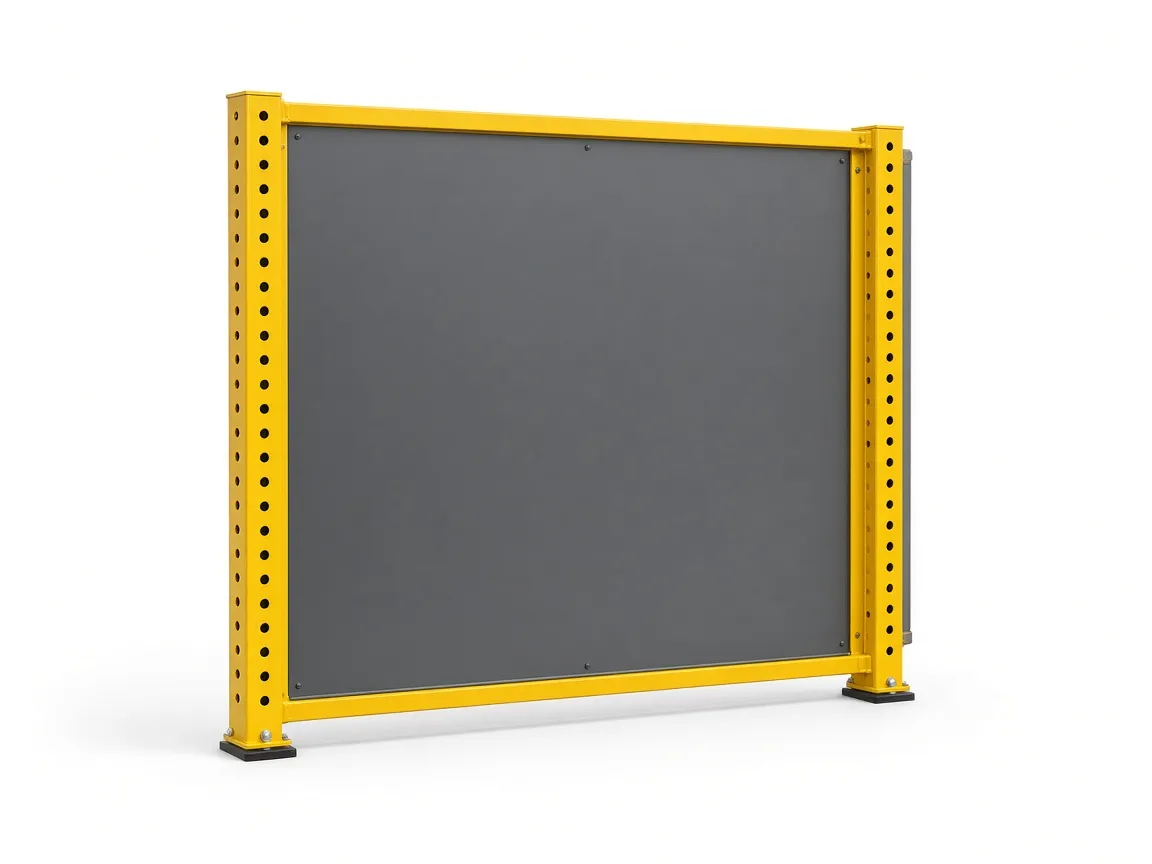
 SM Series
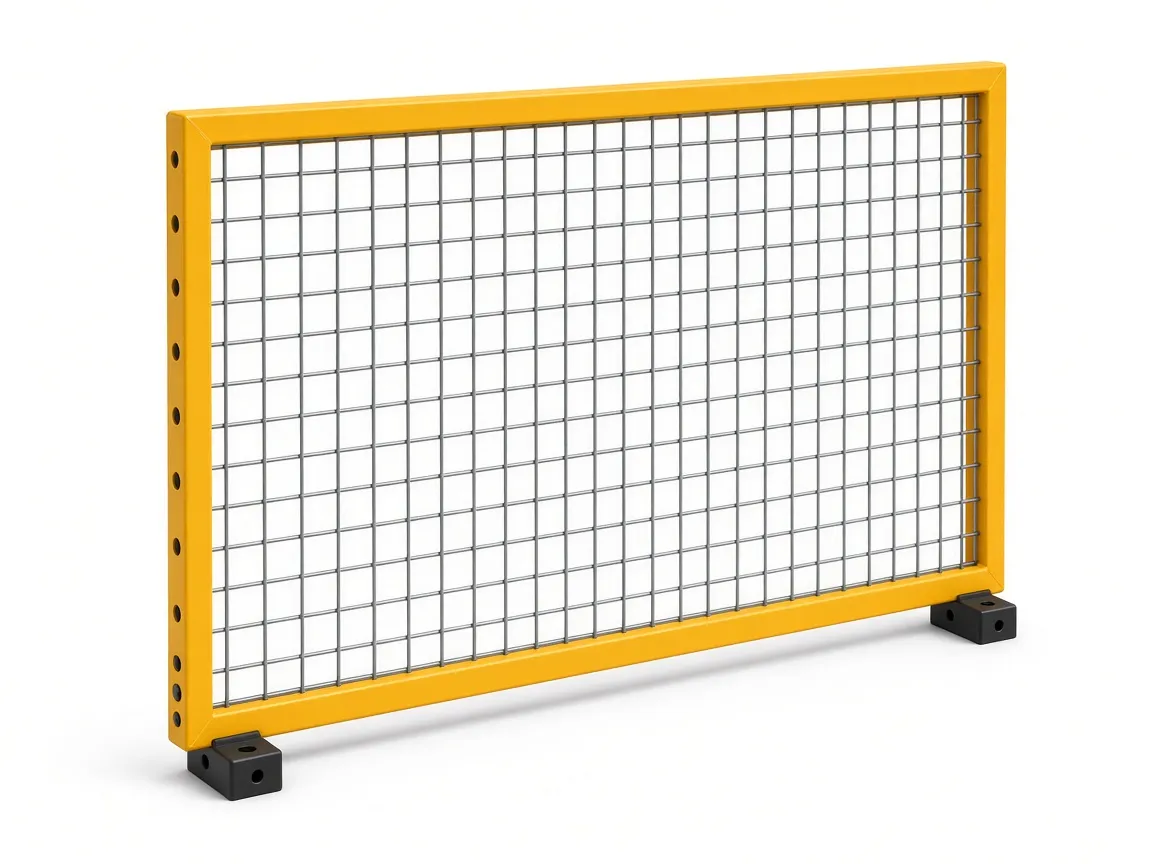
D Series
Wire mesh safety fence panels
Spot-welded 20 × 100 mm mesh in a rigid profile frame: the standard machine guarding panel for robot cells, automated lines and machine perimeters.
Specifications
Strong, light and see-through.
Wire mesh machine guarding keeps people out of the hazard zone while operators can still see the process and air and light pass through. The mesh is spot-welded into the profile frame for a rigid panel with clean edges and is arranged to resist climbing.
Panels come in widths from 100 mm to 1500 mm, so a perimeter closes exactly without cutting or welding on site. The fence height and its distance from the hazard are selected together using the safety distances in ISO 13857, and the mesh opening sets the minimum distance from the panel to the hazard behind it.
D Series at a glance
- Widths 100–1500 mm (4–59 in)
- Heights 1000–2250 mm (39–89 in)
- Same posts and fixings for all panels
- Mesh 20 × 100 mm
- Spot-welded profile frame
- Height classes
- S 1000 · M 1400 · L 2000 / 2050 · XL 2250 mm
- Impact test, EN ISO 14120
- 106 kg pendulum · 1950 J
Why wire mesh
The default perimeter guard.
Most robot cells and machine perimeters use mesh on most sides and switch to solid panels only where something else must be contained.
-
Clear visibility
Operators and supervisors see the process without opening a gate.
-
Air and light pass through
No heat build-up and no dark corners inside the cell.
-
Impact tested
Panels passed the EN ISO 14120 impact test with a 106 kg, 1950 J pendulum.
-
Modular widths
100–1500 mm widths close any perimeter without site fabrication.
-
Height classes
From 1000 mm to 2250 mm, selected with ISO 13857 for your layout.
-
Matching gates
Seven gate types built from the same panels and fixings.
Panel families
Mix panel types in one fence.
SM Series
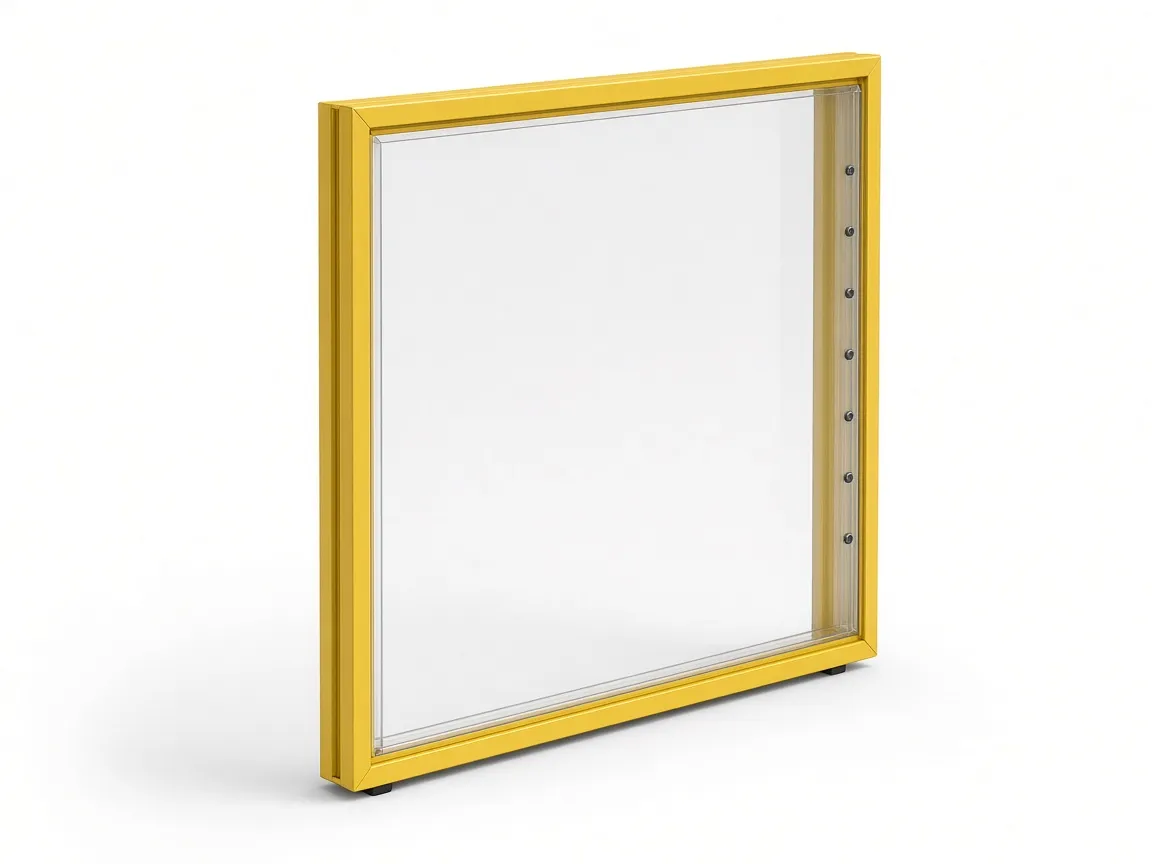 PC Series
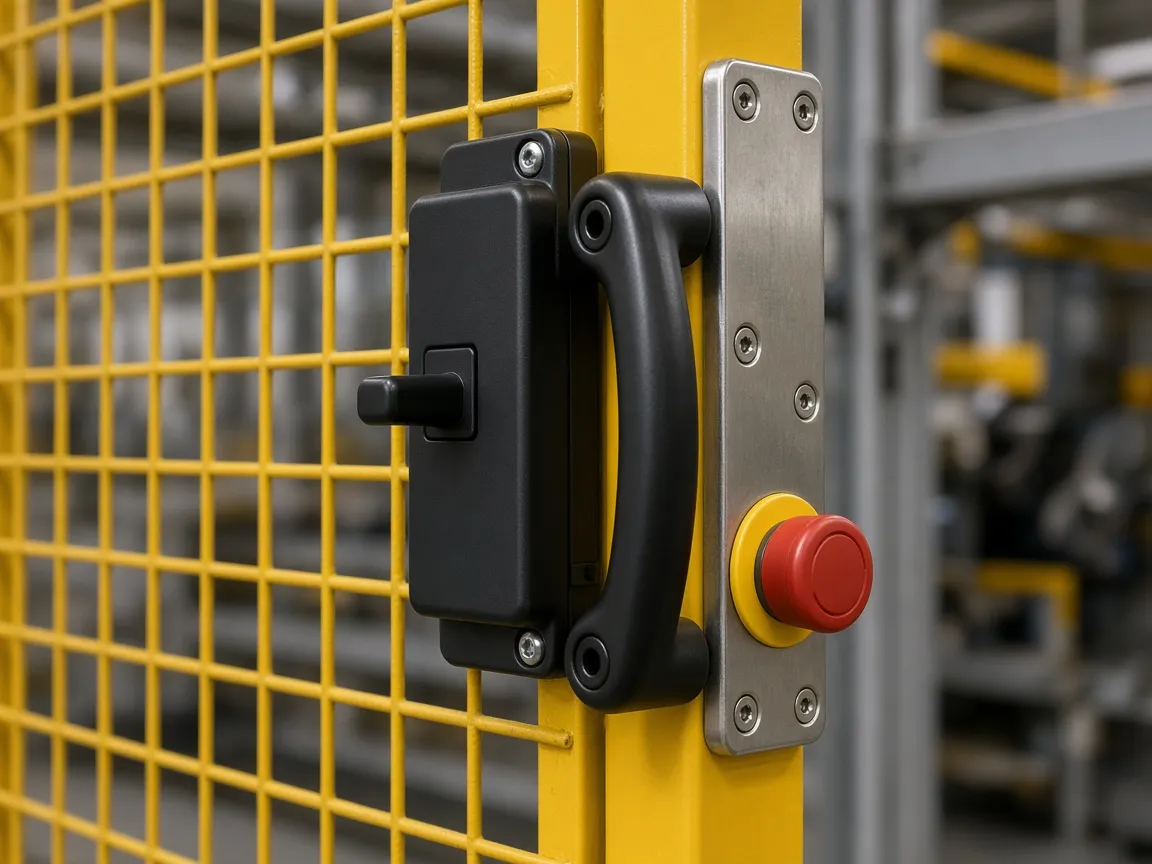 Gates
FAQ
Frequently asked questions
Is a wire mesh fence safe enough for a robot cell?
Yes, when the mesh opening and the fence's distance from the robot meet ISO 13857 and the panels are rated for impact. Wire mesh is the most common robot cell perimeter because it is strong, light and lets operators see the process.
How far must a mesh panel be from the hazard?
The minimum distance depends on the size and shape of the mesh opening and is read from the reach-through tables in ISO 13857. Our engineers check it for every layout; where a panel must stand closer, a polycarbonate or sheet metal panel is used instead.
Can D Series panels be combined with other panel types?
Yes. D, SM and PC panels use the same posts and fixings, so one fence can mix mesh, sheet metal and polycarbonate sections.
Which height should I choose?
It depends on the hazard height and the distance from the fence to the hazard. Tall perimeter fences normally use the L or XL height class; see our safety fence machine guarding guide.
Send us your layout.
We return a D Series layout with heights, gates and a bill of materials before you order.