Packaging lines should be guarded by risk and access priority, not by aisle order or whatever equipment is easiest to fence first. Effective machine guarding starts at pinch points, infeed and outfeed transfers, operator load points, maintenance doors, and any opening where someone can reach moving parts, product flow, or hazard zones during normal operation, setup, or jam clearing.
The fastest way to get a packaging line right is to rank hazards by when people need access. Guard first where hands can reach moving parts during normal production, then where jams are cleared, then where maintenance opens the line, then where forklifts, pallets, or carts enter an automated cell. That sequence reduces rework and gives you a defensible layout before hardware is ordered.
Which packaging-line hazards to guard first
A line-specific approach works better than a perimeter-only approach because packaging equipment is built around frequent human interaction. Operators load product, clear faults, inspect output, and service equipment in ways that create predictable exposure points. A documented risk assessment by a qualified person should determine the final sequence, but the practical starting point is usually the same: guard the places people touch first, not the walls that are easiest to fence.
1. Reach hazards during normal production
These are the openings and access points used every shift. Examples include hand-pack stations, carton insertion points, operator load positions, and HMI locations placed next to moving machinery. If a worker can lean, reach, or step into a hazard area without a deliberate stop, that point belongs at the top of the list.
Common fixes include moving the access point, extending the perimeter, or replacing a fixed opening with an interlocked gate sized for the task. The goal is simple: keep routine production tasks outside the hazard envelope.
2. Jam-clearing and product-recovery points
Packaging lines often create predictable jams at merges, diverters, case infeed points, wrappers, and accumulation sections. These locations become high-risk because workers are tempted to reach into motion to recover product quickly. If a jam happens often enough that people can describe the workaround by memory, the guarding is not finished.
Design the line so the safe response is obvious and fast. That may mean relocating sensors, changing conveyor geometry, adding an interlocked gate, or separating the jam-prone section from adjacent walkways. In many cases, the best solution is reducing the need for reach-in access rather than simply enclosing the hazard after the fact.
3. Maintenance and cleaning doors
Service doors matter because technicians often open them under time pressure. A maintenance door should be treated as an access control point, not as a convenience panel. If dangerous motion can continue after the door is opened, or if the door allows a hand to reach the hazard before the machine has stopped, the design needs to be revisited.
Interlocks, lockout/tagout planning, and safe restart logic should be part of the discussion from the beginning. For recurring service tasks, it is often better to create a more deliberate maintenance route than to rely on repeated bypasses of a poorly placed door.
4. Infeed and outfeed transfers
Conveyors create some of the most common pinch and draw-in points on a packaging line. Look closely at belt-to-roller transitions, accumulation rollers, side guides, curves, merge points, and pusher mechanisms. Transfer points are especially important because they tend to sit where people walk, reach, or place product.
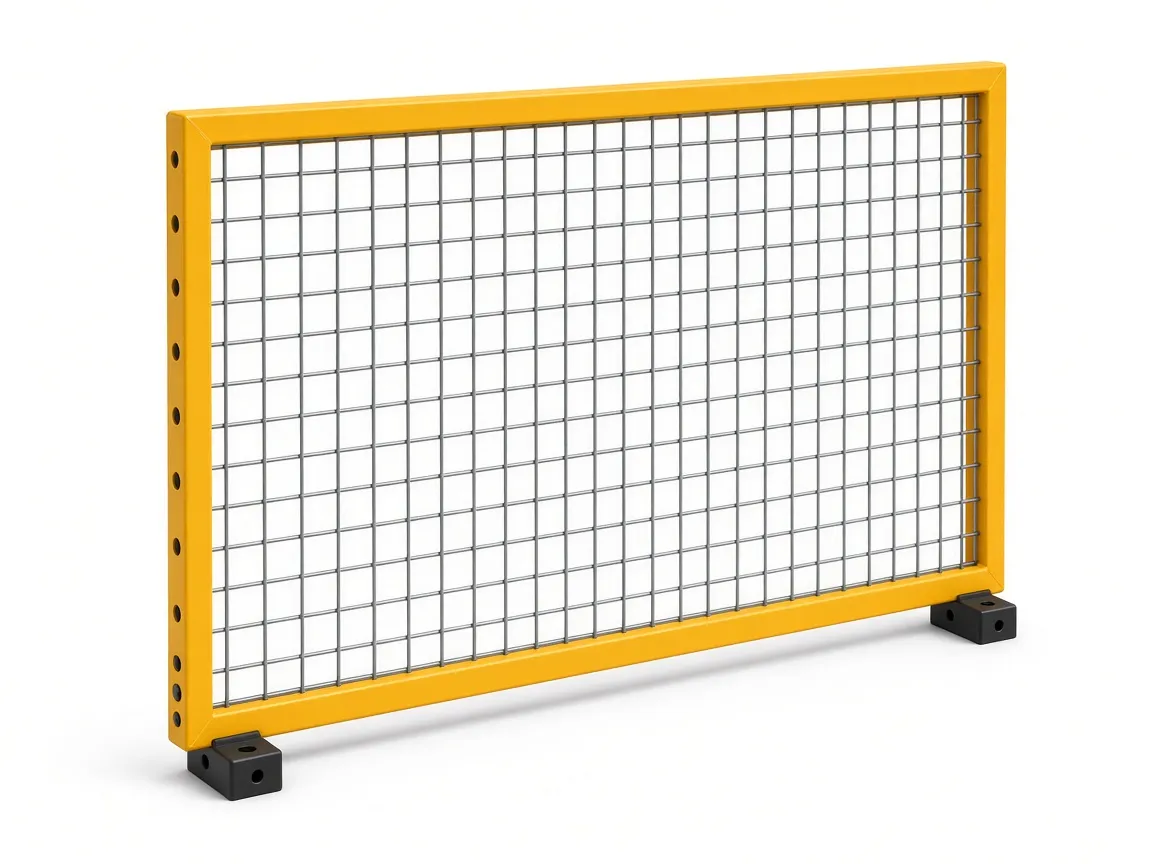
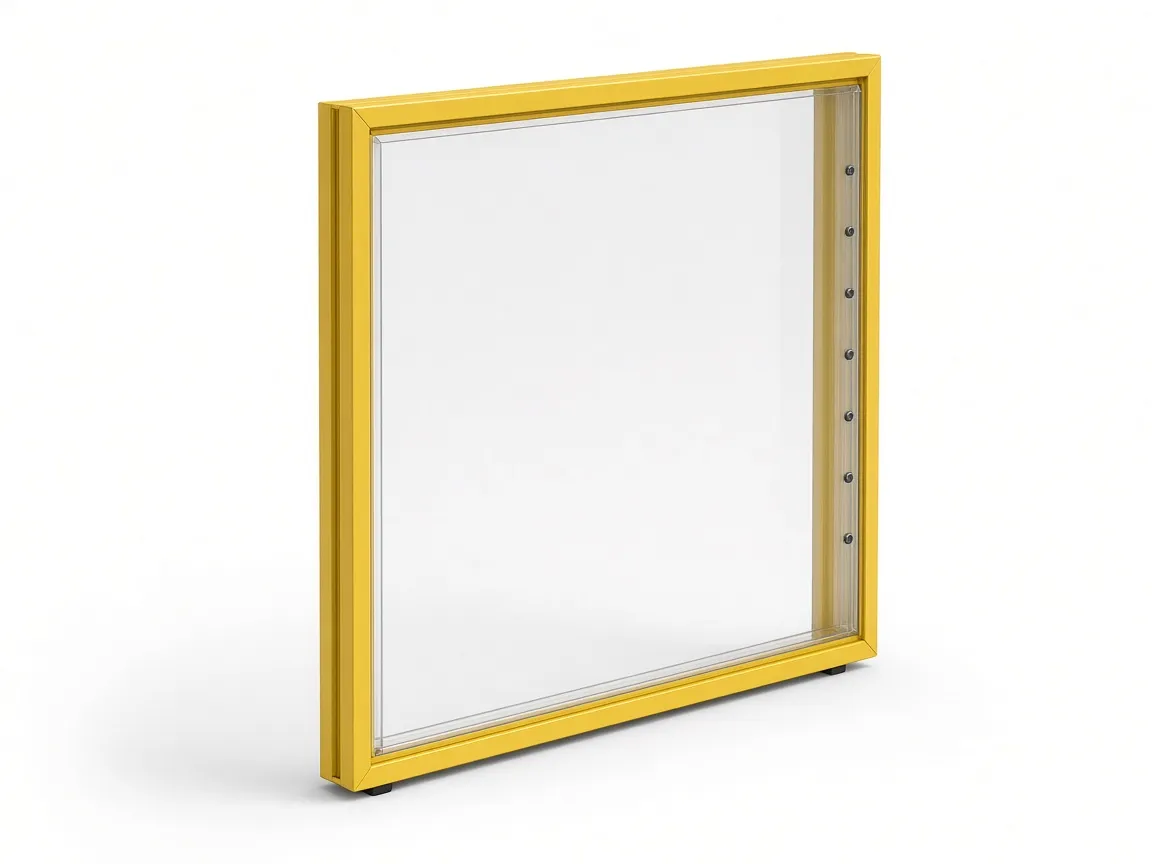
A conveyor that looks easy to walk alongside may still need full-height guarding if hands can reach the nip point from the aisle side. For these areas, use a guarding style that matches the hazard and the environment. Conveyor guarding should balance visibility, access control, and containment. Mesh panels are often useful where operators need to see the line. Polycarbonate can help when visibility and containment are both important. Sheet metal is useful where spatter, chips, noise, or debris are concerns.
5. Robot, palletizer, and automated cell interfaces
At the end of a packaging line, automated equipment usually expands the hazard envelope. A palletizer, depalletizer, or robotic case-handling station should be guarded as a full cell, not as a single machine. The perimeter must account for pallet entry, forklift traffic, protected openings, and any conveyor that enters the cell.
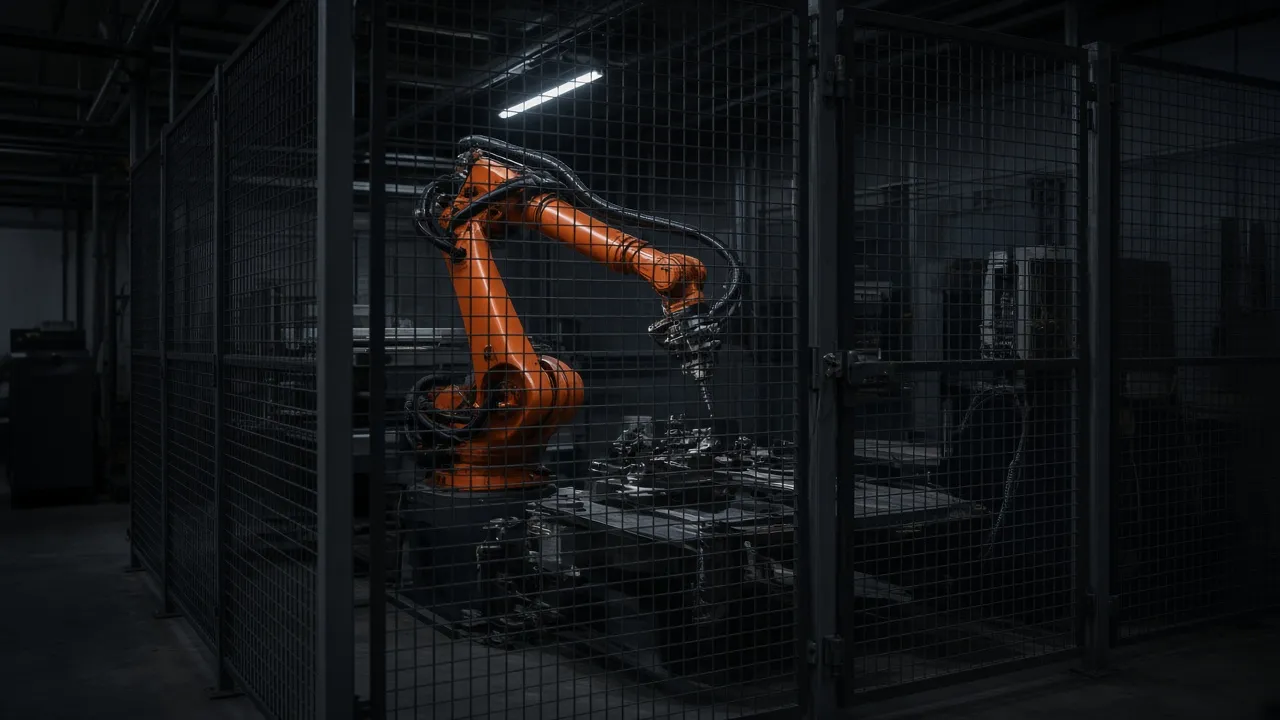
For these layouts, palletizing guarding is often the right starting point when pallets and forklifts must move in and out of the area. If the line includes a robot, the access strategy should also follow robot cell guarding principles so the perimeter, gates, and openings match the robot's operating envelope.
A simple prioritization framework for packaging lines
Use this sequence when you walk a packaging line or review a layout:
- Identify every place where a person can reach moving parts during normal production.
- Mark every recurring jam-clearing or product-recovery location.
- Locate every maintenance door, service panel, and cleaning access point.
- Map conveyor transfers, pinch points, and accumulation zones.
- Identify pallet, cart, or forklift openings into automated areas.
- Recheck the layout for bypass paths, reach-over points, and future expansion.
This sequence is useful because it follows actual exposure, not equipment order. The first hazard a person can realistically touch is usually the one that deserves attention first.
Checklist for a floor walk
- Can an operator reach a moving part without a deliberate stop?
- Does the line create a predictable jam that workers clear by hand?
- Are there maintenance doors that open before motion stops?
- Do conveyor ends, curves, or transfers expose a nip point?
- Are forklift or pallet openings large enough to invite reach-in access?
- Would a worker naturally take a shortcut around the intended safe path?
- Does the line layout still work if the equipment is reconfigured later?
The layout mistakes that create the most rework
Several guarding mistakes show up again and again on packaging lines. The most common is fencing the easiest side first instead of the highest-risk side. Another is placing a gate where it blocks maintenance access, which encourages workers to defeat the intended path. Teams also leave conveyor ends open because the motion looks simple, even though the transfer point still creates a serious pinch hazard.
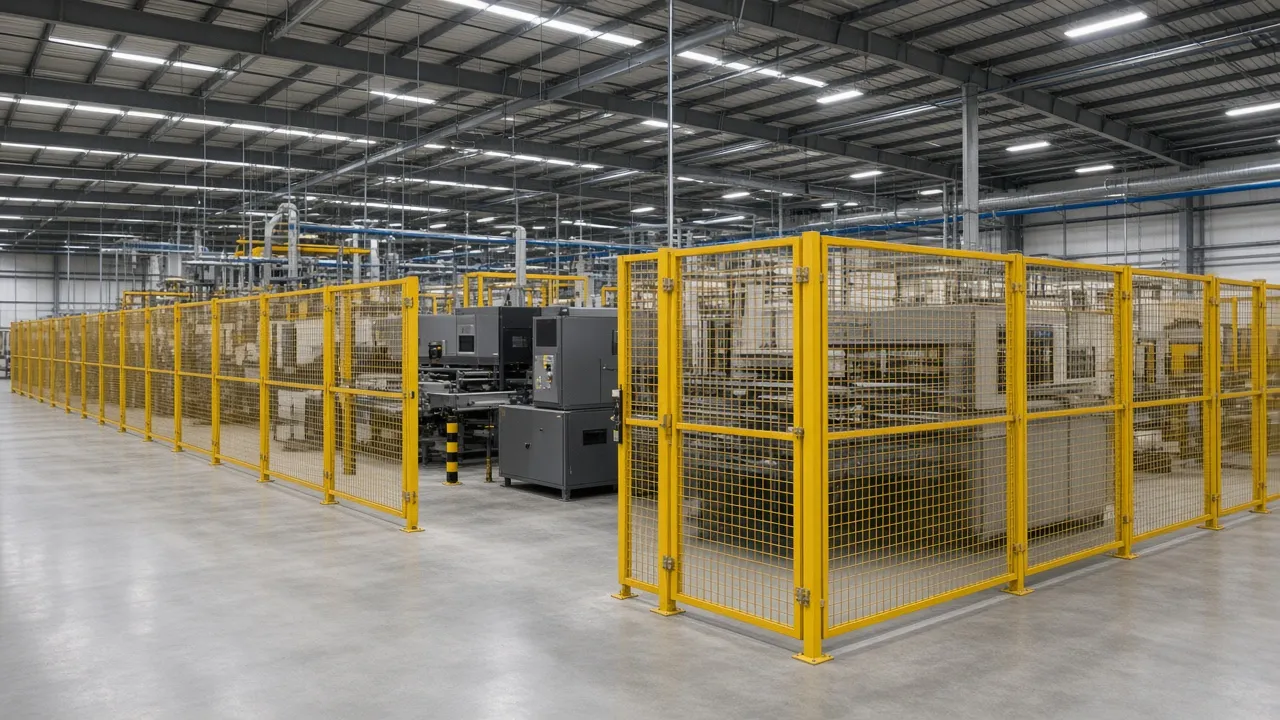
Other problems include mixing operator access and maintenance access into the same opening, or using too many small fence sections that create seams, weak points, and future layout headaches. If the line is likely to change, modular components reduce rework. That is one reason many plants prefer a system they can reconfigure as the line evolves. See modular machine guarding products for panel and gate options that fit different packaging layouts.
What a better layout looks like
A better layout keeps the safe path obvious. Operators have one defined access point for routine tasks. Maintenance has a separate route for service work. Forklift or pallet movement has a wide opening with a controlled gate strategy. And all openings are positioned so workers do not need to reach around the guard to finish the job.
If the safe path slows production too much, the line will eventually encourage a workaround. Good guarding makes the safe choice the easiest choice.
How standards shape the guarding decision
Packaging-line guarding should be based on a documented risk assessment and the applicable standards for the equipment and application. OSHA 29 CFR 1910.212 sets general machine guarding requirements. ANSI B11.0 and ANSI B11.19 are used to evaluate risk reduction and safeguarding performance. ISO 12100 guides risk assessment and risk reduction, ISO 14120 addresses the design and construction of guards, and ISO 14119 addresses interlocking devices associated with guards.
For safe reach distance decisions, ISO 13857 is the standard to check. It is used to help determine how far a hazard must be from an opening or barrier so a person cannot reach it. For safety-related control systems, ISO 13849-1 is commonly used to evaluate the performance of the safety function. If the line includes industrial robots, ANSI/A3 R15.06 should also be reviewed. The current edition of each standard should be verified for the specific application before final design decisions are made.
If you want a deeper reference on how guard type, opening size, and access control fit together, see machine safety standards and guard sizing concepts. If you need a formal safety-distance check for a guarding layout, the safety distance calculator can help explain the reach-distance logic used in light curtain applications and related safeguarding decisions.
How to specify a packaging-line guarding package
The best RFQs include more than overall machine dimensions. Send the full line layout, conveyor centerlines, floor elevations, maintenance access needs, gate swing or slide direction, pallet or cart entry dimensions, and any planned future expansion. That information helps the reviewer understand where access is actually needed and where a fixed barrier is the better answer.
If you send a CAD file or even basic dimensions, a guarding review can show where the line should be opened, where it should be closed, and where a gate belongs instead of a fixed panel. For a layout review before you order, use send your machine layout for a 2D/3D guarding review.
Common panel and gate choices on packaging lines
Mesh panels are usually the default choice when visibility and airflow matter and when the hazard is mostly reach-based. Polycarbonate panels are useful when the process needs visibility but also needs containment for chips, fragments, or splash. Sheet metal panels are better when the line needs more containment, such as noise reduction or protection from debris. The gate style should match the task: single or double swing where space allows, sliding where swing clearance is limited, and wider access where pallets or carts must pass.
For the gate hardware itself, a purpose-built handle set can improve access control and serviceability. If the line needs interlocked access with escape release, reset, and lockout capability, the gate hardware should be selected with those functions in mind rather than added later as an afterthought.
What to guard first on a packaging line
If you only tackle the highest-value areas first, start with the places people touch most often and the points where motion is most hazardous. That usually means operator access points, jam-clearing locations, conveyor transfers, maintenance doors, and palletizer or robot interfaces. Once those are controlled, the remaining perimeter becomes much easier to finish cleanly.
For plants planning a new line or a retrofit, a layout review can save time and reduce rework. ZYD Technology supports U.S. packaging projects by reviewing layouts, CAD files, or basic dimensions and returning a guarding proposal before ordering. If you are ready to move forward, request a machine guarding quote or send your layout for a review.