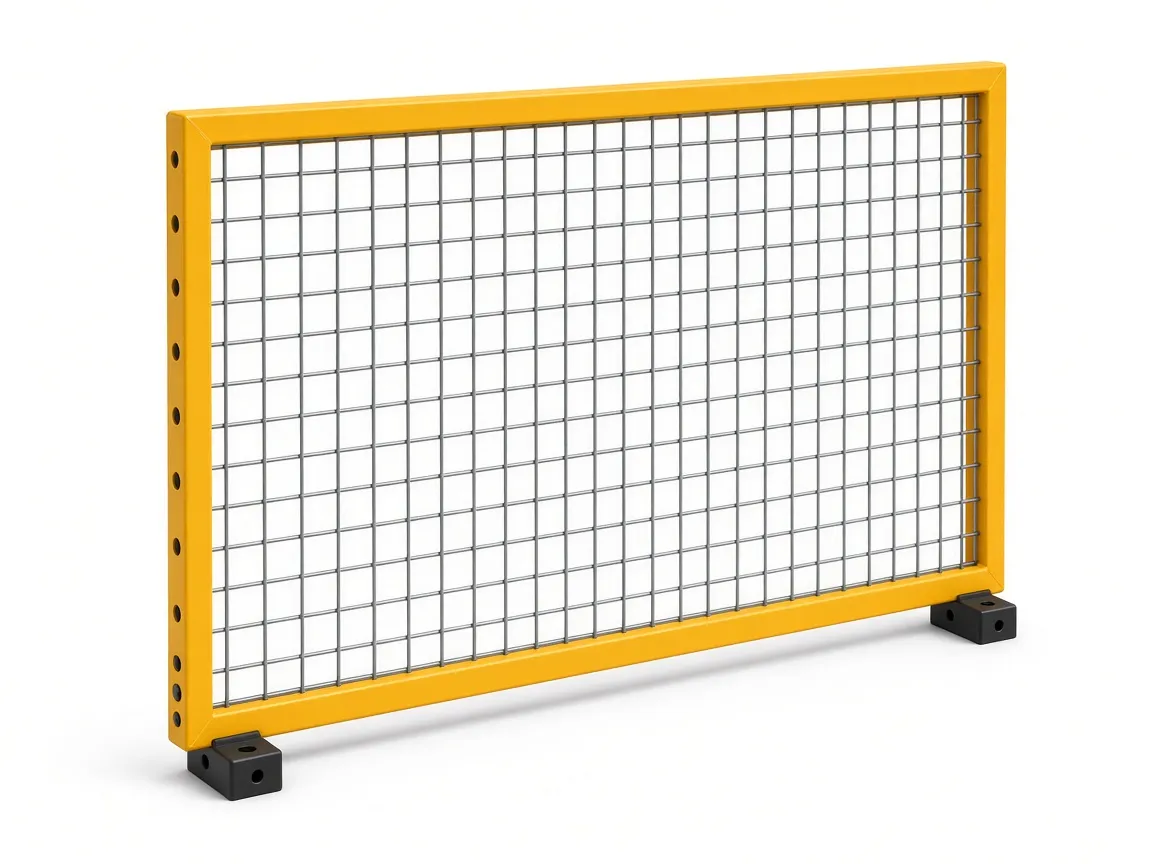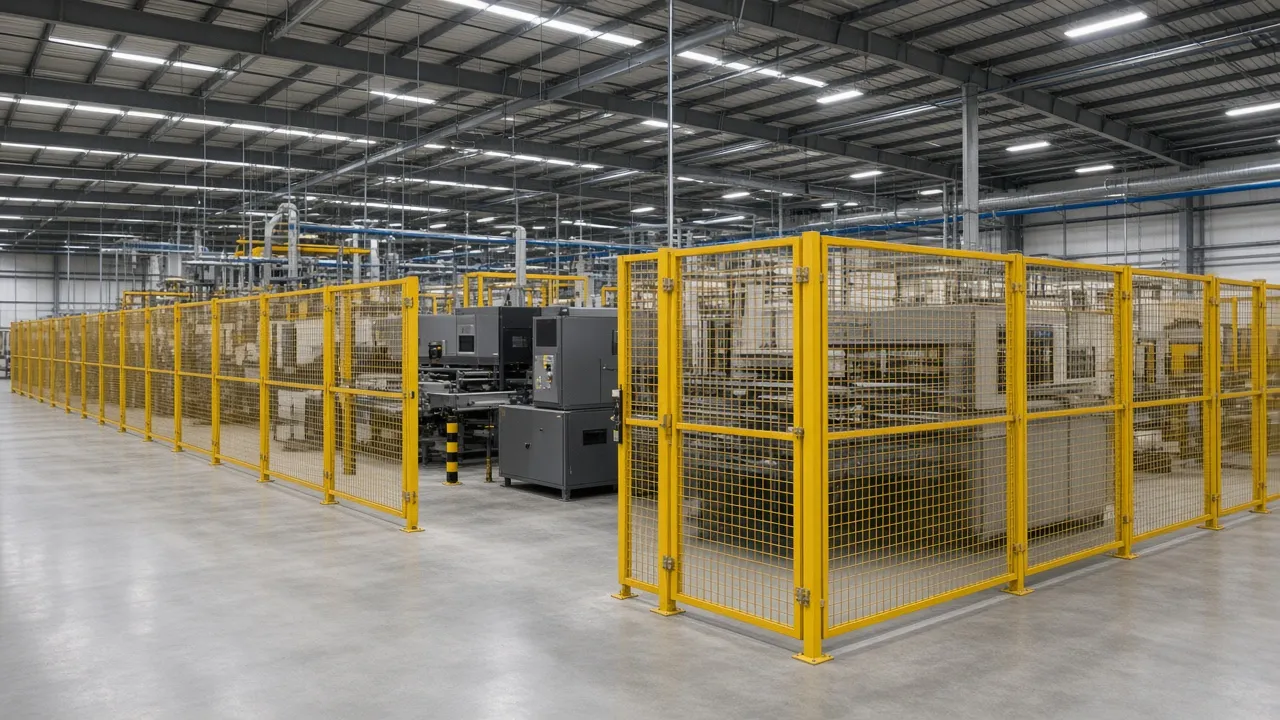
A machine guarding safety gate is the planned access point in a perimeter fence. The right gate depends on the space in front of it and how often people go through, and every gate used during normal operation needs an interlock that stops the hazard before anyone can reach it. Guard locking is added where the machine takes longer to stop than a person takes to walk in, and walk-in cells need an escape release on the inside.
Gate types compared
| Gate type | Opening | Floor space needed | Typical use |
|---|---|---|---|
| Single swing | Person access | Swing radius in front of the gate | Operator and maintenance doors |
| Double swing | Wide | Two swing radii | Forklift access, tool and fixture changes |
| Sliding | Person or wide | Space along the fence, none in front | Walkways, tight aisles, along conveyors |
| Folding | Wide | Short swing | Wide openings where a full swing does not fit |
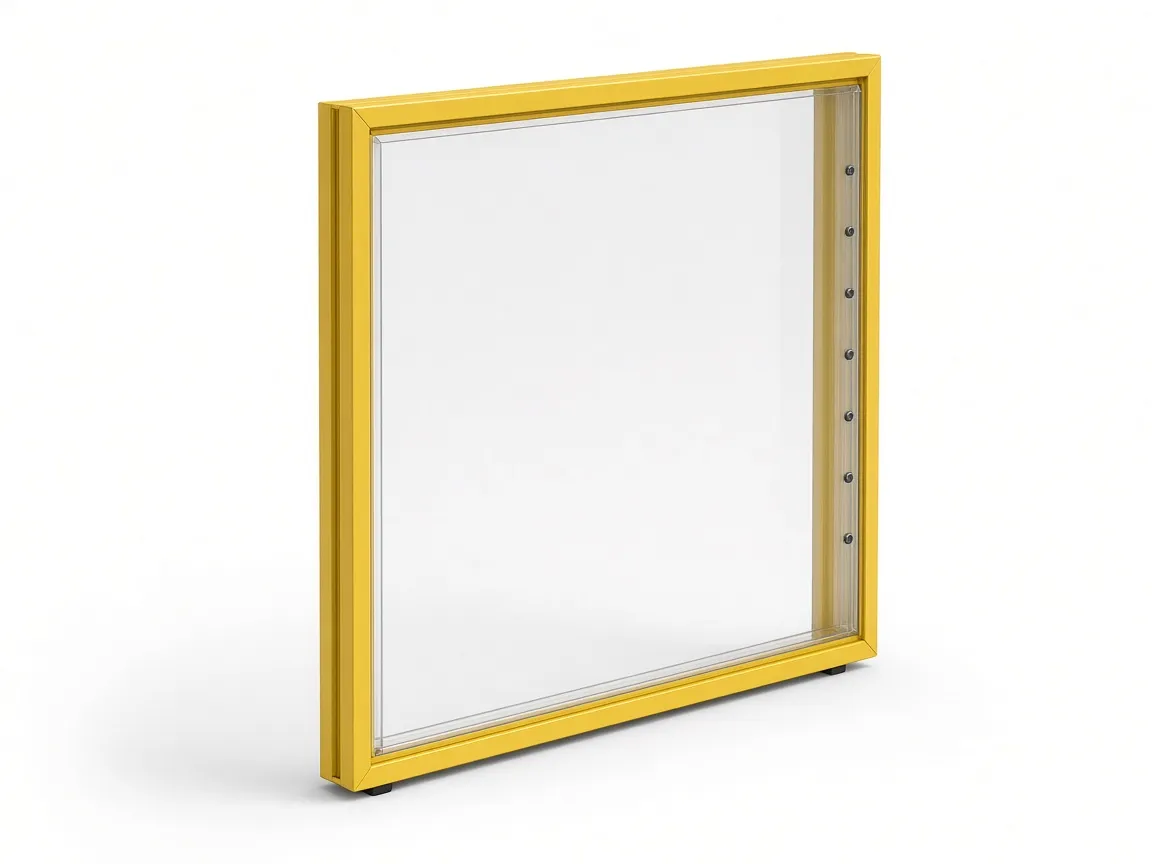
Genmacs offers seven gate types in its safety gate range, built from the same panels as the fence so the perimeter looks and performs the same all the way round.
Interlocks: stopping the hazard when the gate opens
An interlocking device links the gate to the machine's safety control system: opening the gate sends a stop command and prevents restart until it is closed. To work in real life it must also resist being defeated:
- Choose the device type for the application, for example a coded switch rather than a plain limit switch where people may be tempted to bypass it. ISO 14119 describes the types and the measures against defeat.
- Mount the actuator so it cannot easily be removed or replaced with a spare.
- Build the safety circuit to the performance level your risk assessment requires (ISO 13849-1), and wire it to NFPA 79.
- Closing the gate alone should not restart the machine; restart should be a separate, deliberate action from outside the cell.
Guard locking: when the machine cannot stop in time
If the robot, spindle or press takes longer to stop than a person needs to open the gate and reach the hazard, an interlock alone is not enough. A guard locking device keeps the gate closed until the hazard has stopped or a safe state is confirmed. Compare the machine's measured stopping time with the time it takes to open the gate and walk to the nearest hazard, and use guard locking whenever the first is longer.
Escape releases and trapped persons
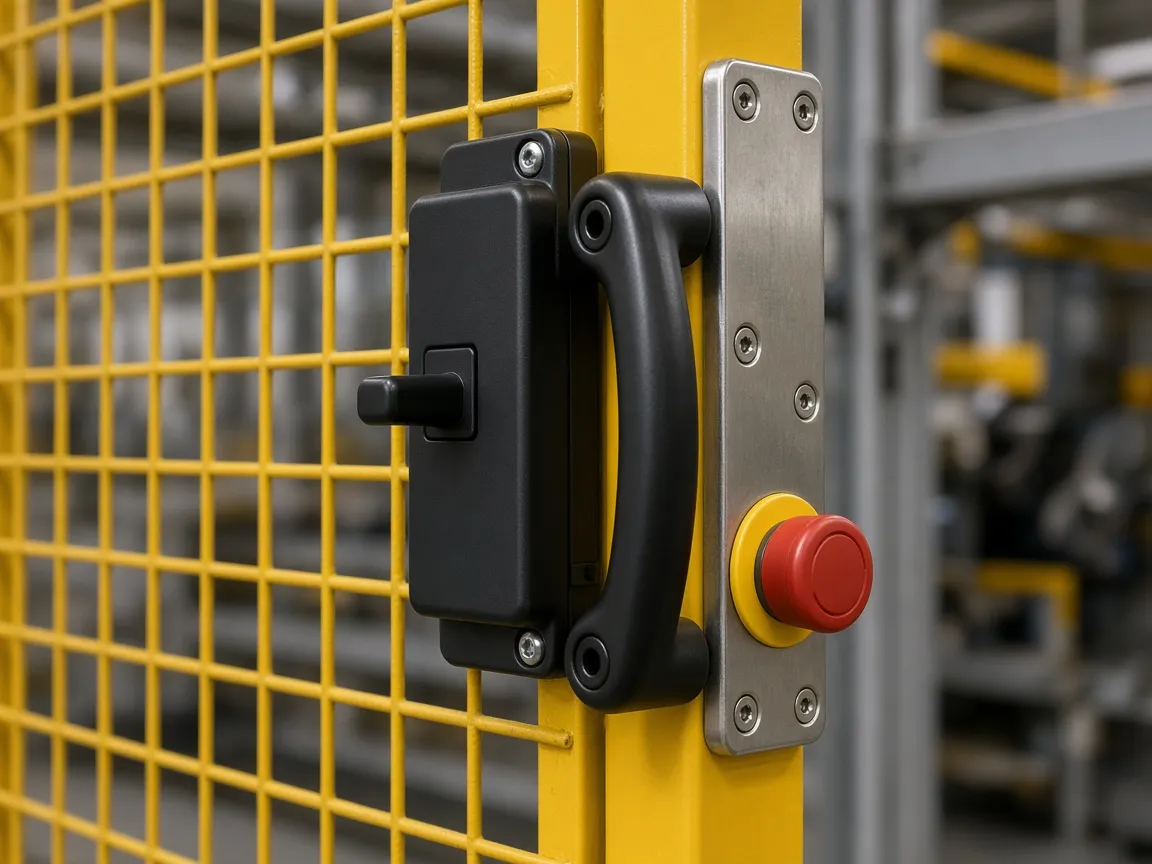
A gate that can lock must never trap anyone. Walk-in cells need an escape release on the inside that opens the gate without a key or tool. Combine it with lockout for longer tasks: a person working inside should hold a personal lock or the key that prevents restart, so the cell cannot be started while they are there.
Genmacs integrated safety gate handle sets carry the interlock, guard locking and escape release in one assembly that fits all gate types.
Where to put the gates
- Follow how people actually work: put gates where operators and technicians need to go, or they will make their own access.
- Keep gates out of the robot's reach where possible, so the path from gate to hazard is long.
- Allow for forklifts and fixture changes with double or folding gates.
- Check the swing: a gate must not open into a walkway or a moving machine outside the fence.
- Check every gap around the closed gate against ISO 13857, like any other opening.
For the fence around the gates, read our safety fence machine guarding guide and the panel material comparison.
Get gate and access recommendations
Send ZYD Technology your layout and tell us how people use the cell. Our engineers will propose gate types, positions and interlocking options. Request a quote.