Choosing the right machine guarding fence material comes down to the hazard you need to control and the work the machine has to do. Wire mesh, sheet metal, and polycarbonate each solve different problems: visibility, chip or coolant containment, airflow, washdown, impact resistance, and maintenance access. The best choice is the one that matches the hazard profile, not a one-size-fits-all default.
Start with the hazard, not the material
Before you pick a panel type, define what the guard must do. OSHA 29 CFR 1910.212 is the general machine guarding rule, but it does not tell you to use one panel material over another. The final layout should come from a documented risk assessment by a qualified person, with the current edition of the applicable OSHA, ANSI, and ISO standards checked before design is released.
Questions to answer before choosing a panel
- What hazard must be controlled: reach-in access, flying chips, coolant spray, sparks, spatter, broken tooling, or noise?
- Do operators need continuous line-of-sight into the process?
- Will the area be washed down or exposed to coolant, oil, or corrosion?
- How often do maintenance teams need physical access?
- Do people work nearby where ejected parts could travel?
- Does the process need natural airflow or heat dissipation through the perimeter?
Quick comparison of the three panel types
| Criteria | Wire Mesh | Sheet Metal | Polycarbonate |
|---|---|---|---|
| Visibility | High | None | High |
| Chip and coolant containment | Poor | Strong | Strong |
| Spatter and flash containment | Poor | Strong | Limited |
| Airflow | Excellent | Poor | Poor |
| Washdown and cleaning | Easy to rinse, but spray passes through | Easy to wipe, but seams can collect residue | Requires careful cleaning and compatible chemicals |
| Impact and abuse tolerance | High when properly specified and installed | High | Depends on thickness, support, and application |
| Maintenance access | Good with gates and openings | Requires planned viewing points or windows | Good visual access, but panels can scratch or haze |
| Typical use cases | Robot cells, conveyors, general perimeters | Welding cells, dirty or noisy areas | CNC machine tools, machine tending, splash zones |
Wire mesh: best when visibility and ventilation matter most
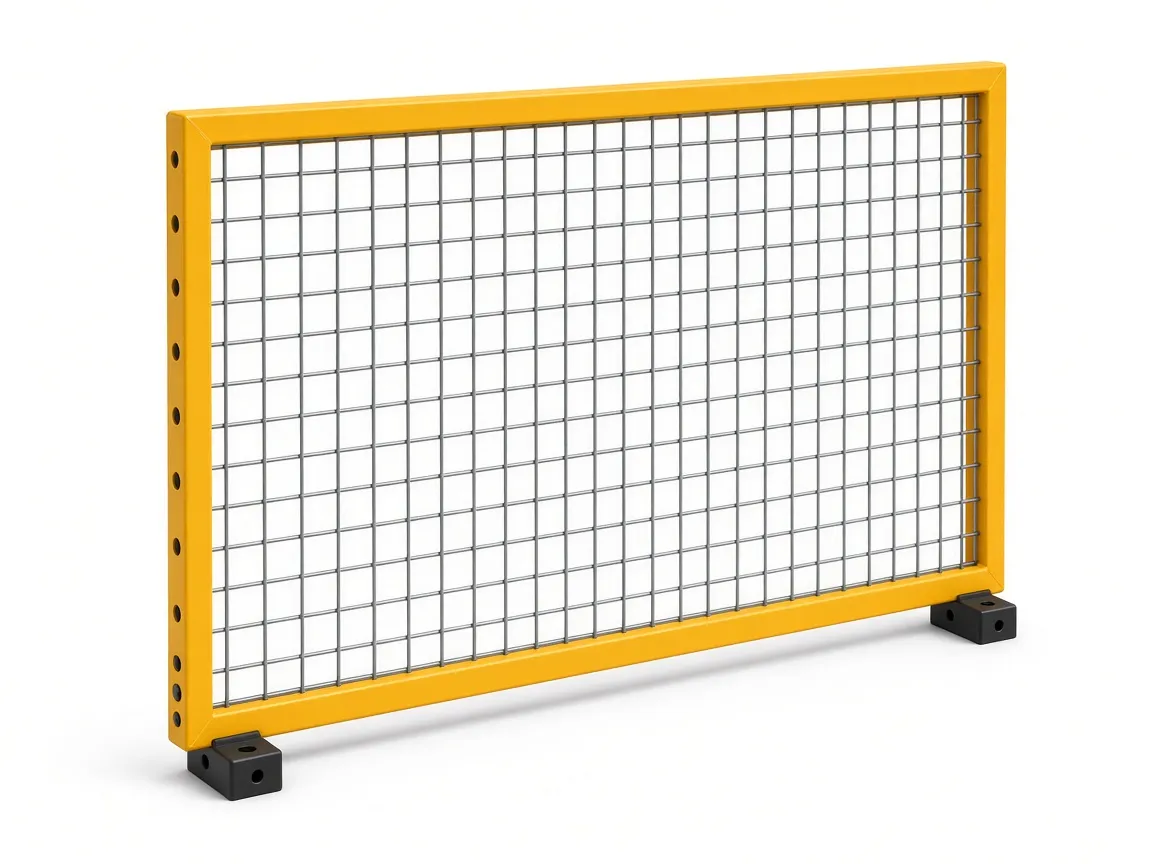
Wire mesh is usually the first choice for perimeter guarding when the main goal is to keep people out while preserving sightlines and airflow. It is a strong fit when the process is safe to observe through the fence and the hazard is primarily reach-in access rather than spray or spatter.
Where wire mesh usually fits
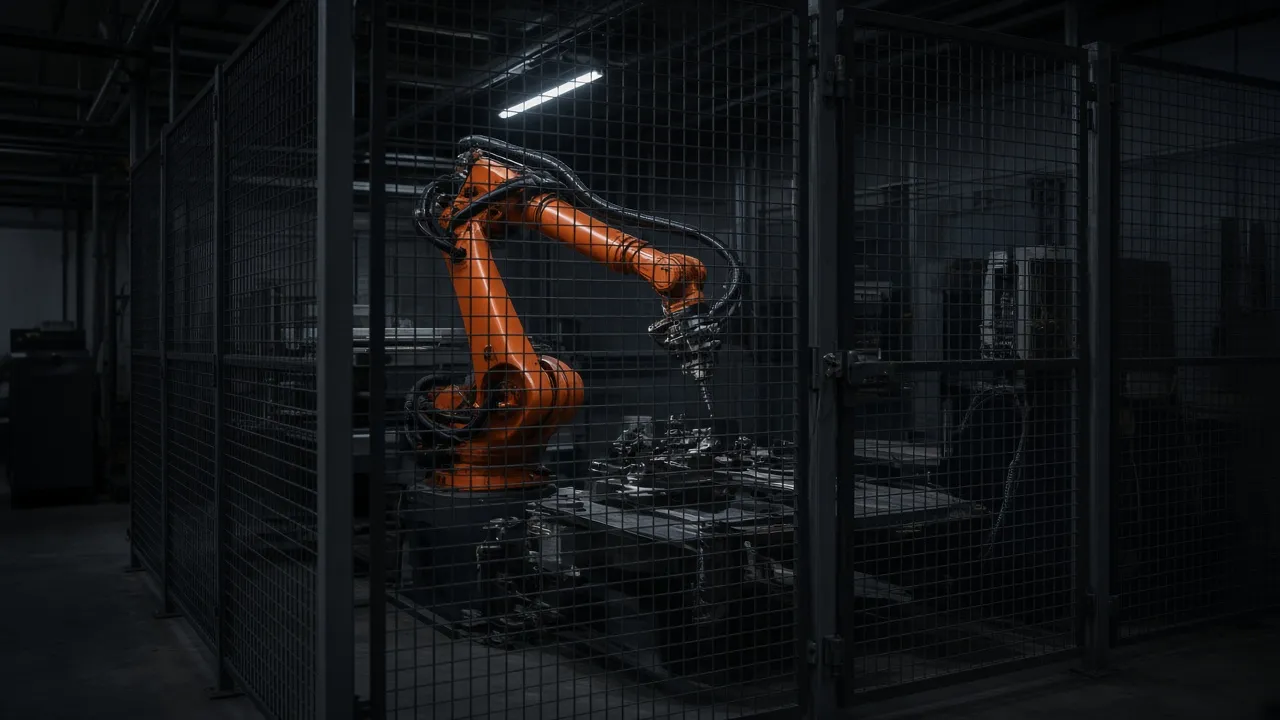
Wire mesh is common around robot cell guarding, conveyor lines, palletizing systems, and general automated perimeters where operators need to see the machine state without opening the guard.
Strengths
Wire mesh panels provide clear visibility for troubleshooting, allow air to move freely around the machine, and are easy to integrate with modular posts and interlocked gates. If a process runs hot or needs frequent visual checks, mesh often offers the least restrictive barrier that still supports safe perimeter control.
Trade-offs
Mesh is not the right answer for coolant spray, fine chip containment, welding spatter, or heavy dust control. It is also a poor choice when you need privacy from adjacent work areas or want to reduce noise transmission.
Example
A robot pick-and-place cell with a visible end effector and limited operator intervention often uses mesh because supervisors can monitor the process from outside the perimeter while access remains controlled through interlocked gates.
Wire Mesh Panels (D Series) are a practical starting point when the project needs visibility, airflow, and modular layout flexibility.
Sheet metal: best when you need containment and separation
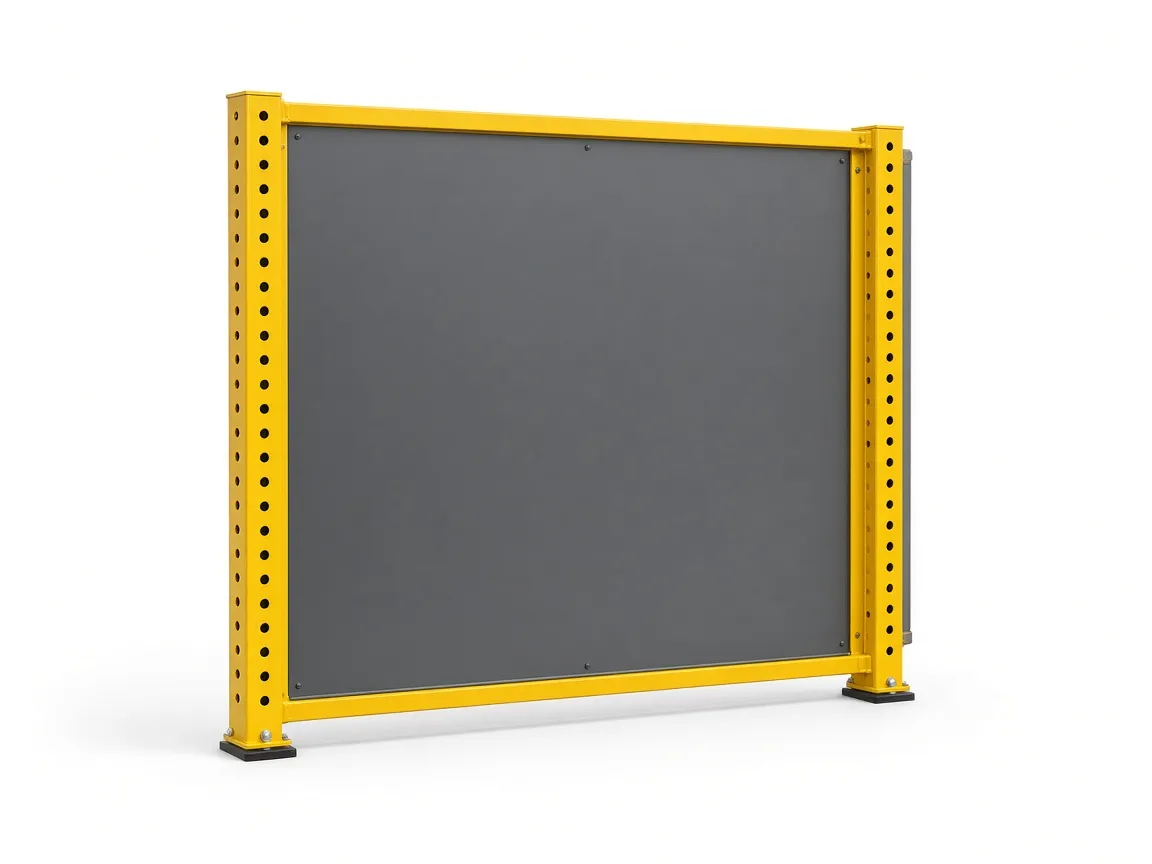
Solid sheet metal panels are the strongest option when the main requirement is to block what the machine throws off. They are especially useful where sparks, spatter, chips, or noise are the real concern and operators do not need a full view of the process all the time.
Where sheet metal usually fits
Sheet metal is common in welding cells, dirty processing areas, and machine zones where the enclosure must separate neighboring workers from light, heat, spray, or airborne debris.
Strengths
Solid panels provide strong containment for chips, coolant, and weld spatter. They also block line-of-sight, which can help with light control and privacy around the process. In some applications, that extra separation is exactly what the hazard calls for.
Trade-offs
The downside is obvious: you lose visibility and airflow. That can make setup checks, troubleshooting, and routine observation harder unless you plan viewing points, windows, or access locations into the layout from the start.
Example
A robotic welding cell often uses sheet metal because arc flash and hot spatter are the primary hazards. In that situation, seeing the process is less important than keeping nearby personnel protected from sparks and light.
Sheet Metal Panels (SM Series) are often the right fit for welding and other applications where containment matters more than sightlines.
Polycarbonate: best when you need visibility plus containment
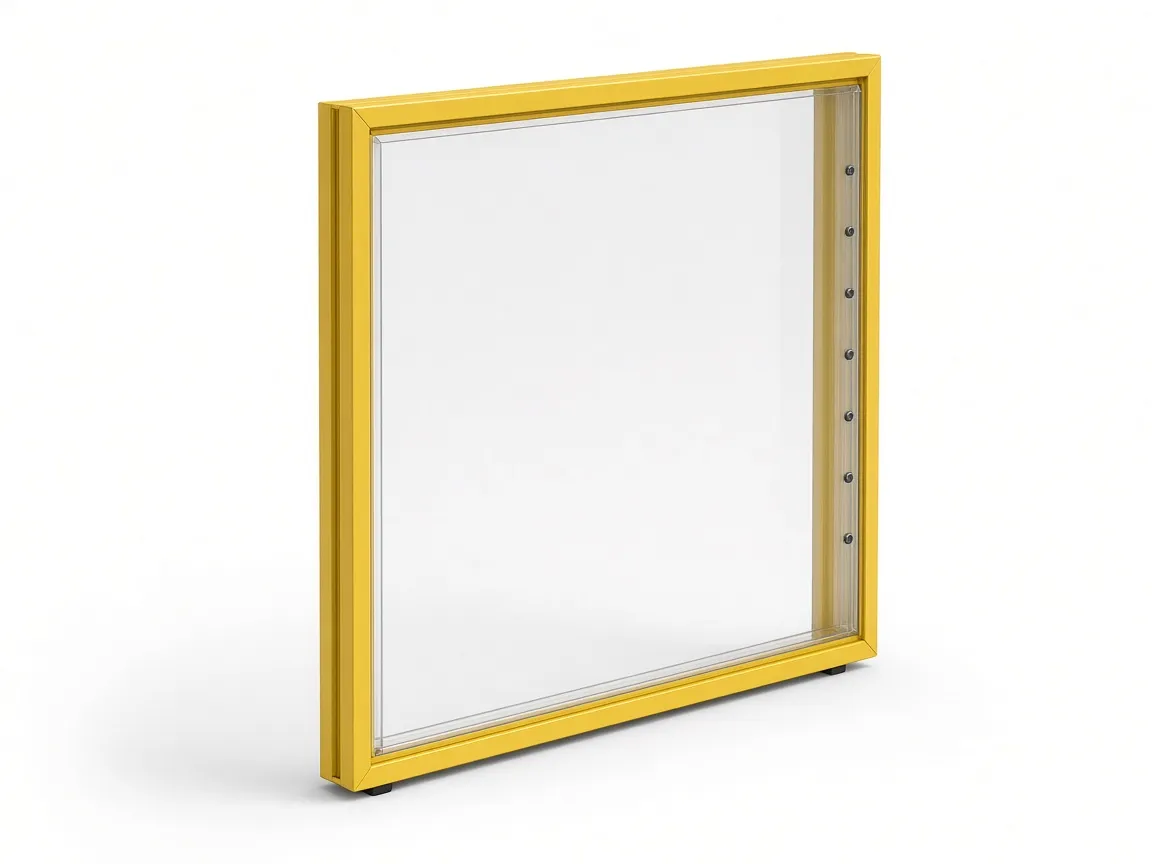
Polycarbonate is the middle ground when you need to see the work and also keep chips, coolant, or small parts inside the perimeter. It is often the most useful option for machine tools and tending cells where visibility is part of the operating method.
Where polycarbonate usually fits
Clear panels are common around CNC machine tools, machine tending stations, and other applications where the operator must monitor tool engagement, part condition, or chip flow while the machine is running.
Strengths
Polycarbonate keeps the process visible while improving containment over mesh. That makes it useful when the team wants to observe setup, part quality, or spindle behavior without exposing workers to chips or coolant spray.
Trade-offs
Polycarbonate can scratch, haze, or dull over time, especially in abrasive chip environments. It also requires thoughtful cleaning because aggressive chemicals or poor maintenance practices can shorten service life. Compared with mesh, it is less forgiving if the machine area needs strong natural airflow.
Example
A CNC machine tending cell with coolant mist and flying turnings usually favors polycarbonate because the operator can see the work, but the chips and fluid stay inside the guarding envelope.
Polycarbonate Panels (PC Series) are well suited to applications where visibility and containment both matter.
How to choose the right material for the job
The right answer depends on what you are trying to stop, what you need to see, and how the machine is maintained. The material is only one part of the system; gate placement, interlocks, openings, and safety distances matter just as much.
If visibility is the top priority
Start with wire mesh if airflow and exposure control are acceptable. Choose polycarbonate if you need visibility and also need to contain chips, coolant, or small parts.
If containment is the top priority
Use sheet metal for heavy spatter, flash, or dirty processes. Use polycarbonate when containment is needed but the operator still has to see the work.
If airflow and heat dissipation matter
Wire mesh is usually the best choice because it does not trap heat or block ventilation through the perimeter.
If washdown or cleaning matters
Think about more than surface wipe-down. Consider whether the panel material will hold up to cleaning chemistry, whether seams will collect residue, and whether the process throws liquids through the openings. Mesh is easy to rinse but does not stop spray. Sheet metal is easy to wipe but can collect buildup at joints. Polycarbonate cleans well when handled correctly, but it is more sensitive to cleaning practices.
If frequent maintenance access matters
Choose the panel material and gate strategy together. A guard that is easy to bypass is usually a guard that was awkward to maintain. Use the right interlocked gate type for the job and make sure access points support the actual maintenance pattern.
For gate selection, see Safety Gates and the matching Safety Gate Handle Set for interlocked access, escape release, and reset functions.
If impact resistance matters
Do not assume that one material automatically solves every impact scenario. Check the actual hazard, the machine energy, the mounting method, and any applicable verification or testing evidence. For perimeter fencing, the guard must be selected and installed as part of the overall risk reduction strategy, not as a standalone panel decision.
A practical selection checklist
- Identify all hazards through a documented risk assessment.
- Decide whether visibility or containment is more important at each section of the perimeter.
- Check whether the machine needs airflow or heat dissipation.
- Define cleaning and washdown requirements early.
- Plan maintenance access points before the layout is finalized.
- Choose the gate type that matches the access pattern.
- Verify openings, heights, and safety distances against the applicable standards for the machine and hazard.
- Confirm the layout will not encourage bypassing or awkward service entry.
For standards context and fence positioning concepts, see Machine Safety. For safety-distance planning during concept work, the Safety Distance Calculator can help with light curtain layouts where applicable.
Application examples by machine type
For industrial robot cells, mesh is often the default because it preserves visibility and airflow. That changes when the cell includes a welding process, chip spray, or other containment issue.
For CNC machine tools, polycarbonate is often the first material to evaluate because it combines visibility with chip and coolant containment. Mesh may still work for some areas of a larger perimeter, especially where the risk is only access control.
For welding cells, sheet metal is often the right starting point because flash and spatter are the primary hazards. Mesh may still be useful in non-exposed sections where visibility is more important than containment.
For conveyors and transfer lines, mesh is often sufficient unless the product path throws off debris, parts, or fluid. In that case, polycarbonate or sheet metal may be needed at specific sections only.
For palletizing and material handling areas, the material choice usually depends on whether the issue is visibility, pallet containment, forklift access, or pedestrian separation. Larger openings and wider gates may matter just as much as panel type.
See the application pages for Conveyor Guarding, Palletizing Guarding, and Warehouse & Material Handling Guarding for more specific layout examples. If you want a broader overview of how these systems are configured, start with Solutions.
Common mistakes engineers make
- Choosing one panel material for the whole plant instead of matching the hazard at each machine.
- Planning the fence before the gate, access, and maintenance strategy are defined.
- Using mesh where coolant, chips, or spatter will pass through it.
- Using solid panels where operators need visibility to troubleshoot or set up the machine.
- Ignoring how cleaning, replacement, and routine service will actually happen.
- Specifying a layout without checking the current edition of the relevant standards.
How to finalize the spec before ordering
The best machine guarding fence layout is the one that fits the hazard, the maintenance routine, and the operator workflow. Once you know whether wire mesh, sheet metal, polycarbonate, or a mix of materials is the right answer, confirm the gate locations, access points, and safety distances before the RFQ goes out.
If you want a second set of eyes on your layout, send your machine layout, CAD file, or basic dimensions to Engineering. ZYD Technology reviews the access points and returns a 2D/3D guarding layout before you order, and you can also use Request a quote to start the process. If you want a broader view of the product options first, see Products.