
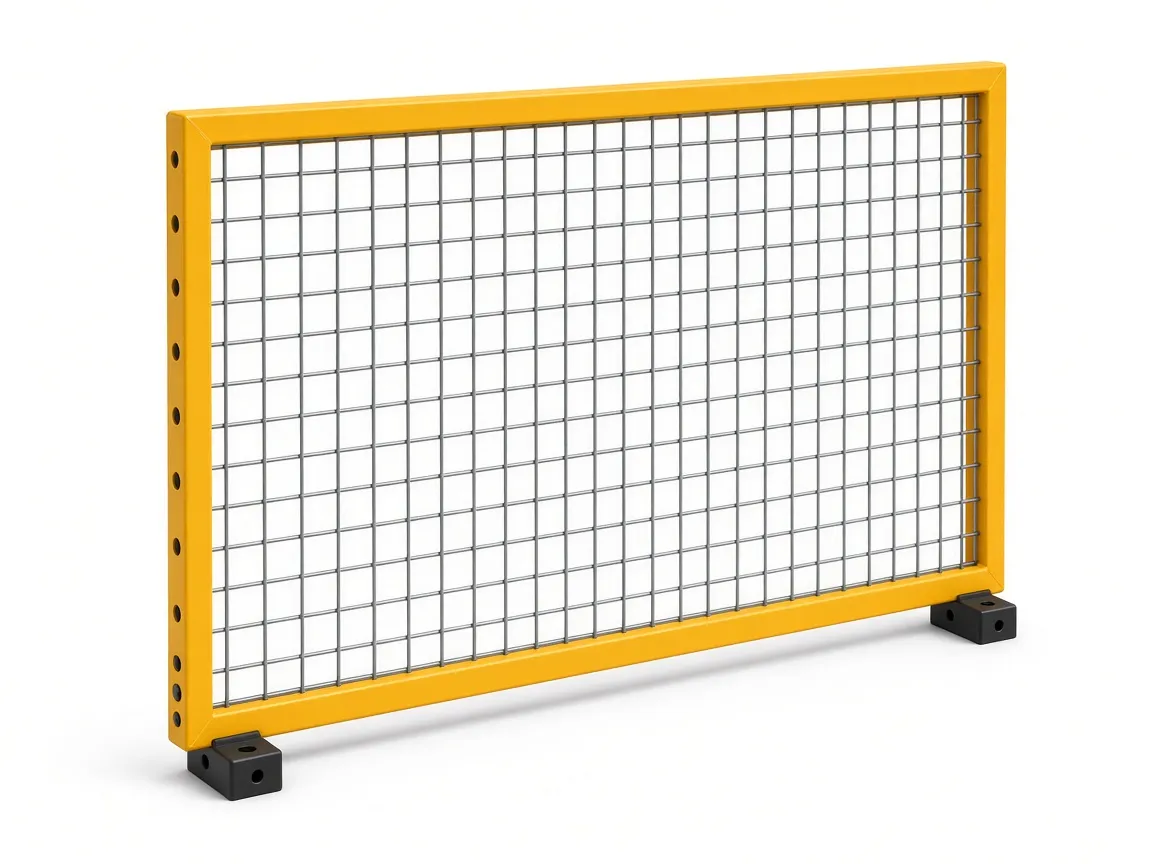
 D Series
Applications
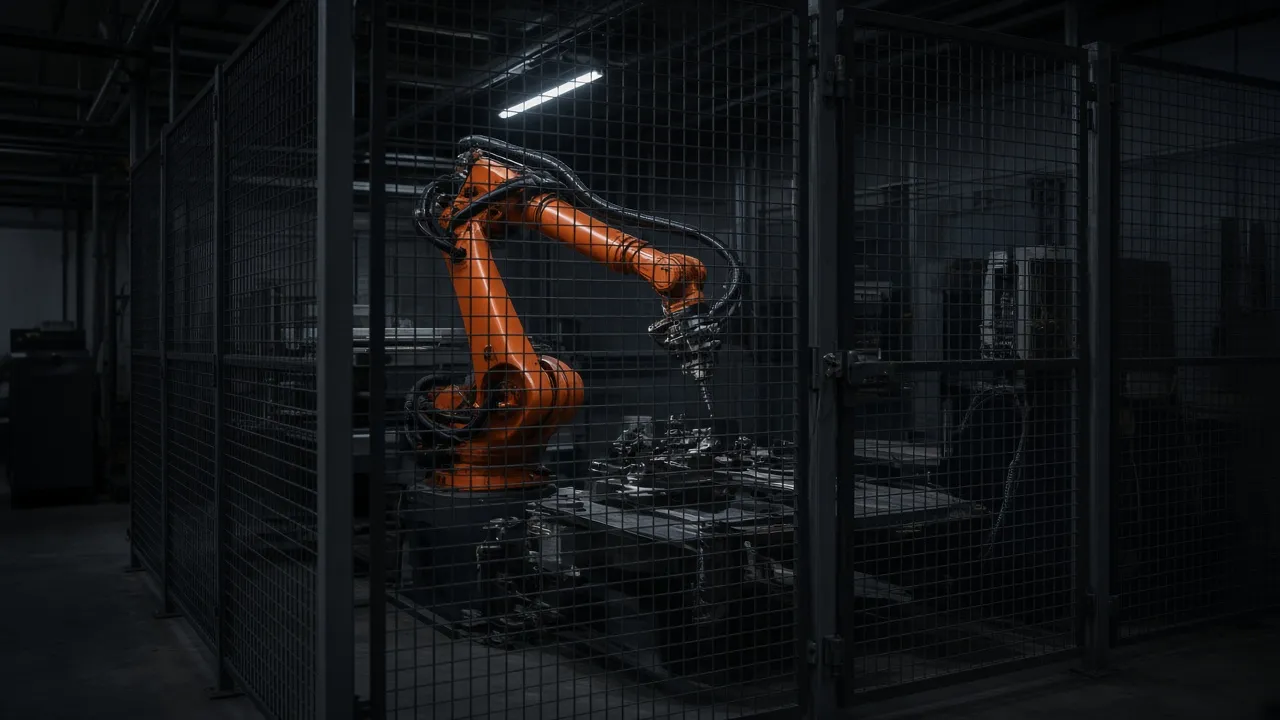
Robot cell guarding
Perimeter fencing, interlocked gates and protected material openings for industrial robot cells, designed around the robot's full reach.
Robot Cell Guarding
Fence the robot's full reach, not its program.
A robot cell fence must keep people outside everything the robot, its tooling and the part it carries can reach, or a reduced space limited by safety-rated functions. Fence height and distance are selected together with ISO 13857, every gate is interlocked, and openings for parts and pallets get their own protective devices.
In the U.S., robot systems are safeguarded under ANSI/A3 R15.06, the adoption of ISO 10218. Our engineers review the layout, the access points and the material flow before anything is produced.
What we configure
- Perimeter fence around the maximum envelope
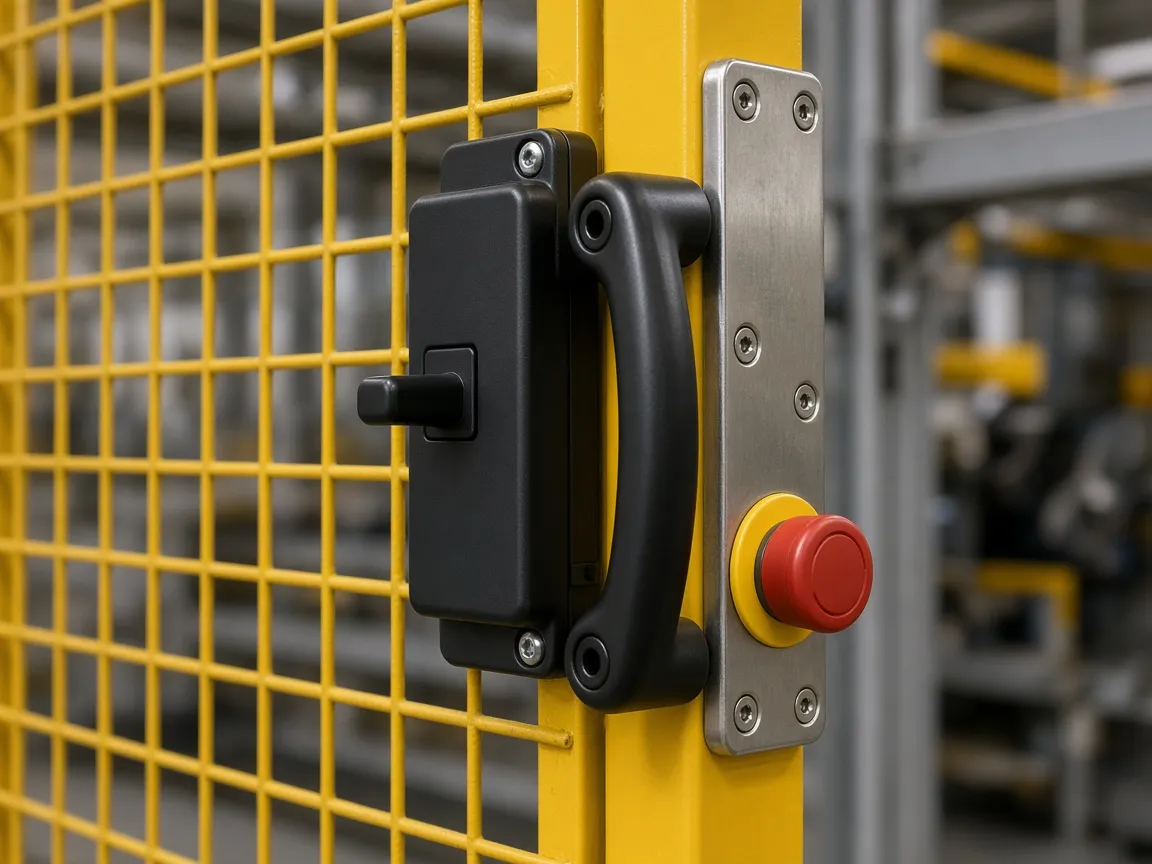
- Interlocked swing or sliding gates
- Guard locking where stopping time requires it
- Escape releases inside walk-in cells
- Openings for conveyors and operator stations
What you receive
- Layout review
- 2D / 3D fence and gate layout
- Bill of materials
- Quotation within one business day
Recommended products
Products for robot cells.
D Series
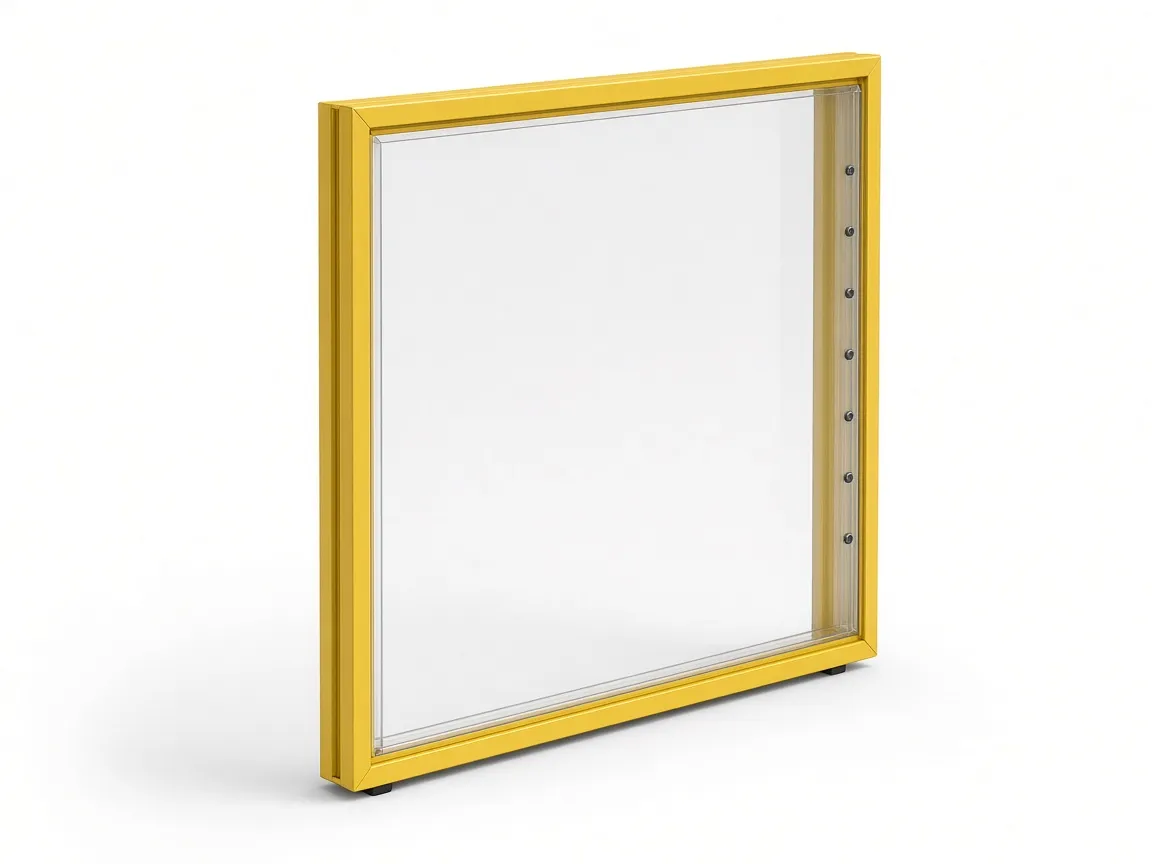 PC Series
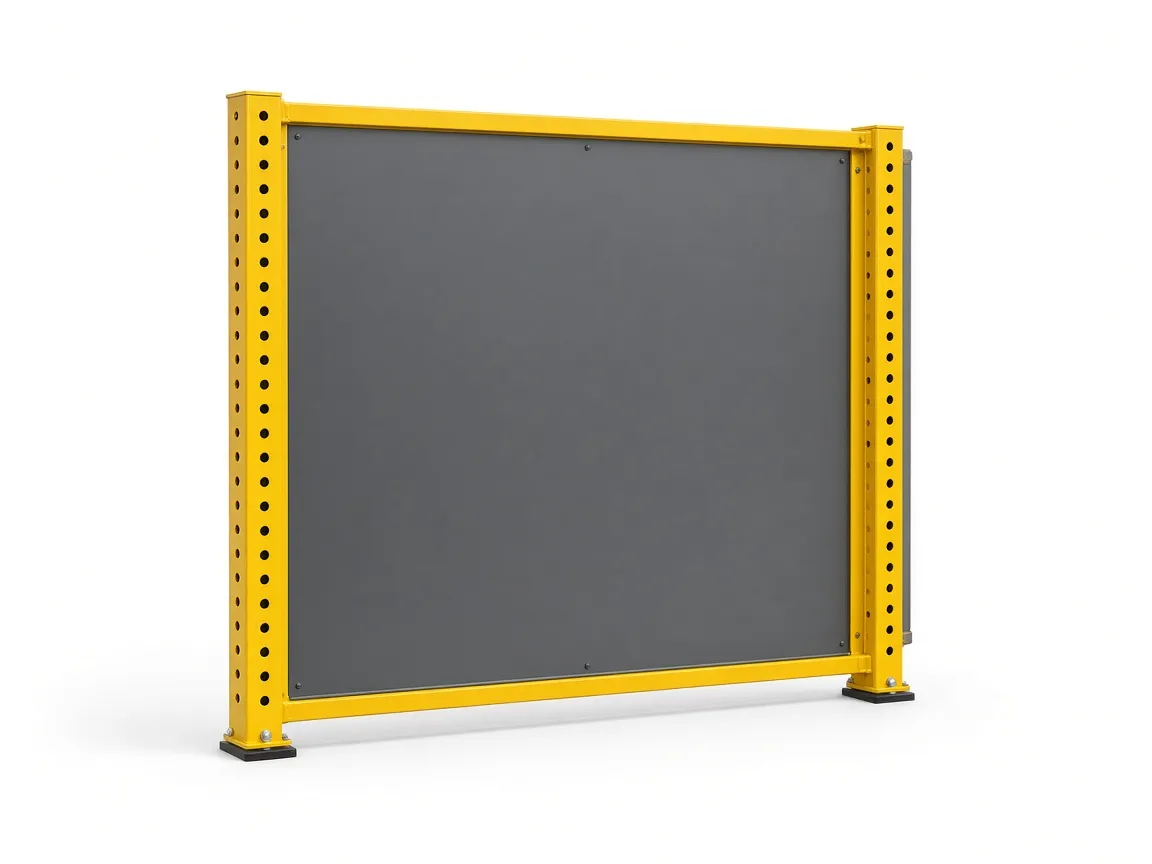 SM Series
 Gates
FAQ
Frequently asked questions
How high should a robot cell fence be?
It depends on the robot's reach and the fence's distance from it. Many integrators use fences around 7 ft 2 in (2,200 mm) so the fence can stand closer to the robot; the exact combination comes from ISO 13857.
Do robot cells need interlocked gates?
Yes. Every gate people use during normal operation should stop the robot before anyone can reach it, with guard locking where the robot takes longer to stop than a person takes to walk in.
Which standard covers robot cell guarding?
ANSI/A3 R15.06, the U.S. adoption of ISO 10218-1 and -2, together with ISO 13857 for fence dimensions and ISO 13855 or ANSI B11.19 for light curtain distances.
Send us the layout.
Share a layout, a sketch or a few dimensions and we will propose the guarding for your robot cell guarding.