A machine guarding safety gate interlock is only as good as the full assembly around it: gate type, latch, interlock, access control, and the layout that supports safe entry and exit. To keep the gate compliant and durable, specify the hardware around the hazard, verify the safety distance, and confirm the gate can survive daily plant use without being defeated.
What buyers actually need from a machine guarding safety gate interlock
The real buying problem is not picking a switch in isolation. It is making sure the full gate assembly supports the safeguarding function the cell needs over time. That means separating three decisions: the physical gate type, the latch and interlock function, and the access-control or reset logic.
The final configuration should be based on a documented risk assessment by a qualified person and a review of the current editions of applicable standards. For U.S. installations, OSHA 29 CFR 1910.212 is the baseline machine guarding requirement, and consensus standards such as ANSI B11.19, ANSI B11.0, ANSI/A3 R15.06, ISO 12100, ISO 14119, ISO 14120, ISO 13849-1, ISO 13855, ISO 13857, and NFPA 79 may also apply depending on the application and control system.
If you need a broader view of how fencing is selected and positioned, see our Machine Safety guide.
Start with the application: what the gate must do
Who uses the gate and how often
Start with the actual use case. A gate used by operators every hour needs different hardware than a maintenance entry point used a few times a week. Frequent use increases wear at the hinges, latch, and actuator mount, and it makes poor alignment more likely to show up as nuisance trips.
Also ask who is using it: production operators, maintenance technicians, setup personnel, or outside service contractors. The access pattern affects not only hardware choice but also the reset location, lockout method, and whether the gate needs an escape release.
What hazard the gate is protecting
The hazard drives the gate design. A robot cell, CNC machine, conveyor transfer point, welding cell, palletizing line, or automated warehouse zone each creates different risks and different opening requirements. Some hazards require immediate access control; others require guard locking because stopping time or stored energy creates a residual hazard after the gate opens.
For a cell-specific view, review our machine guarding solutions by application.
What compliance questions apply
U.S. installations must meet OSHA 29 CFR 1910.212, but that does not tell you exactly how to build the gate. Additional standards help define how to design, position, and validate the safeguarding function. The current edition of each applicable standard should always be checked before release to fabrication.
When a robot is involved, review robot cell guarding requirements and verify the guarding and control system against the robot application, not just the fence itself.
Choose the right gate type before choosing the interlock
Single swing gates
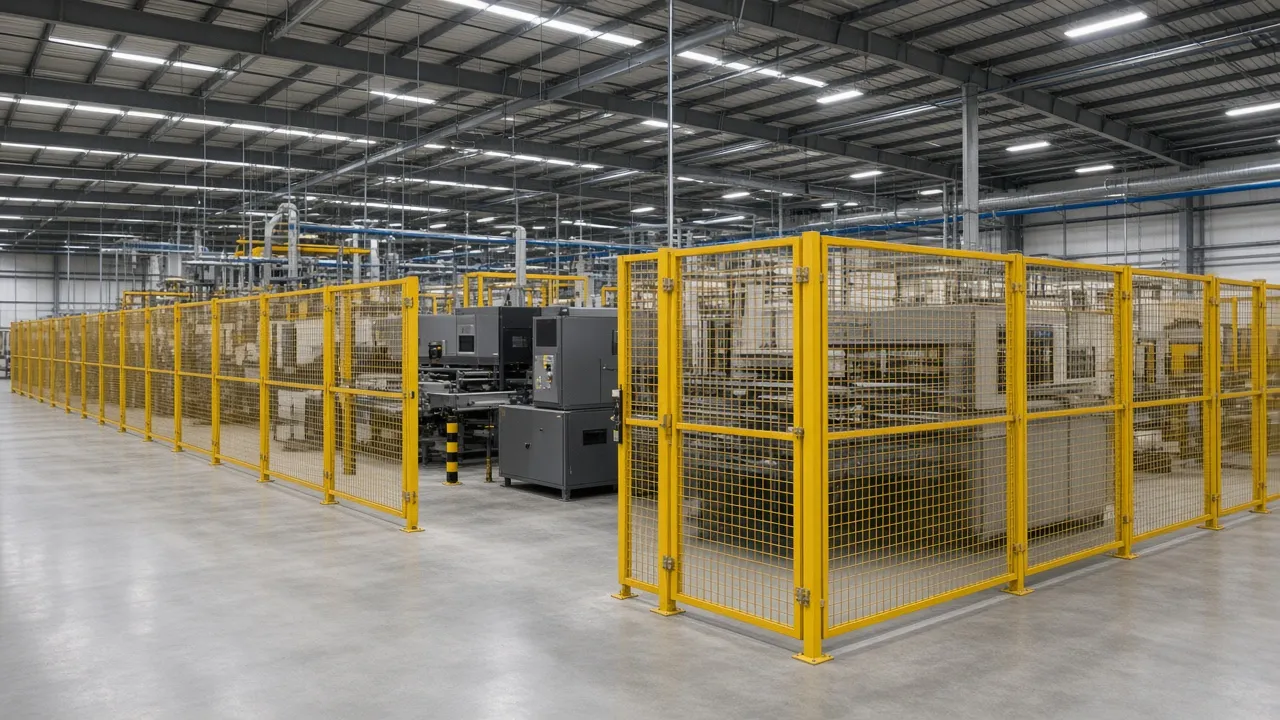
Single swing gates are the simplest choice when you have enough clearance for door travel and need frequent pedestrian access. They are usually the easiest to inspect and maintain. The main risks are swing interference, strike hazards, and poor placement near aisles, carts, or forklifts.
A single swing gate is a weak choice when the open door would block traffic or force users to work around it. If the gate has to open into a congested aisle, the design should be rethought before the interlock is selected.
Double swing gates
Double swing gates are useful when you need a wider opening for maintenance or material movement. They can work well for pallet access or large-tool service, but they introduce more alignment points and more opportunities for sag. If a single leaf can do the job, a double leaf often adds complexity without adding real value.
Use double swing gates only when the width requirement justifies the extra hardware and inspection burden.
Sliding gates
Sliding gates work best where swing clearance is limited by equipment, aisle space, or adjacent structures. Rail-and-wheel and telescoping designs reduce the footprint and can be a better fit for narrow corridors or high-traffic access points. The trade-off is sensitivity to dirt, chips, spatter, and debris that can bind the track or affect travel.
Choose a sliding gate when the opening path is clear and can stay clear. If the floor is rough, contaminated, or likely to collect debris, a sliding design may become a maintenance problem.
Folding gates
Folding gates are a good option when you need a wide clear opening but do not have the space for a full swing path. They are often used in compact layouts where access must remain flexible. The downside is a higher count of hinges, pivots, and joints that must stay aligned.
Folding gates are less forgiving than a simple swing gate. If your team does not want to inspect multiple moving points regularly, a simpler gate style is usually the better choice.
For a side-by-side view of these styles, see our guide to safety gates for machine guarding and our safety gates product page.
Decide how the gate will latch and stay shut
Why latching matters before the interlock
The interlock should not be relied on as the primary device that holds the gate closed unless it is specifically designed and selected for that purpose. The gate needs a positive mechanical closing method that keeps the leaf stable, prevents bounce, and holds the actuator in proper alignment. If the latch is weak, the switch will wear faster and the gate will be easier to defeat.
Good latching reduces nuisance trips and helps the interlock do its job. Poor latching turns the gate into a maintenance problem.
Common latch choices
Common options include manual latches, positive closing latches for heavier leaves, and handle-integrated systems that combine access, reset, and control functions. The right choice depends on the load on the gate, the frequency of use, and the need for escape release or lockout features.
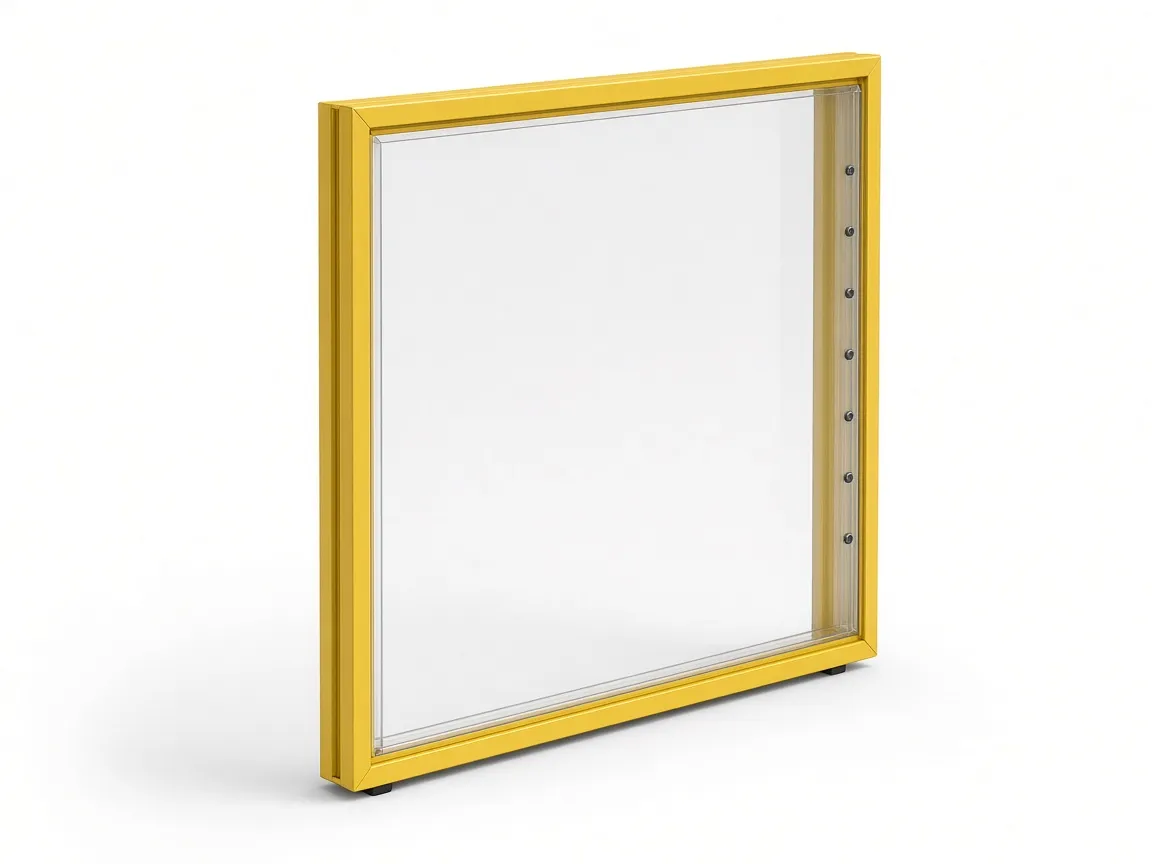
Integrated handle systems can be especially useful when you want one defined access point instead of multiple loose components. Our safety gate handle set combines door handle, escape release, LOTO capability, reset, and permission or emergency stop controls for interlocked gates.
Common failure modes
Most gate problems are mechanical, not electrical. Watch for sagging leaves, worn hinge pins, slop in slide hardware, actuator misalignment after impact, and fasteners that loosen under vibration. If users must lift, slam, or shoulder the gate to get it to close, the hardware is already failing.
On the plant floor, dust, chips, coolant, spatter, and forklift contact expose weak hardware quickly. A gate that looks fine on the drawing may become unreliable after a few weeks if the latch and hinge details are underbuilt.
Interlock selection checklist: what the hardware must do
Core questions to answer
- Is the interlock appropriate for the risk reduction function it must perform?
- Can it be mounted so it is not easily bypassed, shimmed, or defeated?
- Does it match the gate travel, tolerance stack-up, and normal wear expected in the cell?
- Is the actuator protected from impact, debris, and casual tampering?
- Does it provide reliable status feedback to the safety control system?
Mechanical vs non-contact considerations
Mechanical interlocks use a tongue, actuator, or key-based mechanism depending on the design, and they are straightforward to understand and inspect. They are also more sensitive to wear, sag, and misalignment than non-contact designs. Non-contact coded interlocks reduce wear by avoiding physical contact between actuator and switch, which can be an advantage in high-cycle or contaminated environments, but they still need secure mounting and protection from deliberate defeat.
Locking vs non-locking gates
Guard locking is often required or strongly preferred when stopping time, run-down, or stored energy creates a residual hazard after the gate opens. Non-locking monitored gates may be acceptable when the hazard has been fully removed before access and the risk assessment supports that decision. The right answer depends on the machine, the stop time, and the control strategy—not on preference alone.
Access-control choices that keep the gate usable
Keyed access and authorization
Decide who is allowed to open the gate, when, and for what task. If a gate is intended for maintenance only, do not design it like a casual access point. Extra access points increase the risk of bypass and make it harder to control the cell consistently.
Reset and restart logic
The reset function should be outside the hazard zone and arranged so the operator cannot reach into the cell while resetting the system. A poorly placed reset creates a shortcut that defeats the purpose of the fence. The reset location should be chosen as part of the layout, not as an afterthought in the panel shop.
For a deeper look at gate access planning, read our robot cell access control guide.
Escape release and lockout considerations
Where a person could become trapped inside an enclosure, an escape release or equivalent means of egress should be considered and verified during risk assessment. This is especially important in deeper enclosures, dead-end spaces, or layouts where a technician may enter alone for service. If lockout is needed, the gate hardware and the access-control method should support the lockout procedure without creating a bypass path.
Layout mistakes that create weak points
- Placing the gate where forklifts, pallet jacks, or carts can strike the frame or posts.
- Designing swing direction so the open leaf blocks an aisle, a service path, or a blind corner.
- Making the opening too narrow for actual maintenance work, which tempts people to force tools through or bypass the gate.
- Mounting hinges or slide tracks where chips, spatter, dust, or coolant will accumulate and interfere with movement.
- Exposing the actuator or switch to direct impact or easy hand access.
- Leaving gaps at the corners, floor, or overhead transitions that make the gate the only well-designed part of an otherwise weak perimeter.
- Failing to coordinate the gate location with the required safety distance, so a person can reach the hazard before the safety function takes effect.
ISO 13855 is used to position safeguards based on stopping time and approach speed, while ISO 13857 addresses minimum distances to reduce reach-through, reach-over, and reach-around hazards. Those two checks should be reviewed together when you define gate placement and opening size.
If you need a reference on fence openings and reach, see our ISO 13857 safety distance article and our safety distance calculator for light curtain and guarding layout calculations.
Gate type selection and verification reference
| Gate Type | Best Use | Main Risk | Verification Points |
|---|---|---|---|
| Single Swing | Frequent pedestrian access with room for door travel | Swinging into aisles or striking nearby equipment | Hinge load rating, latch alignment, open clearance |
| Double Swing | Wider openings for maintenance or material access | More alignment points and leaf sag | Center alignment, dual leaf closure, latch repeatability |
| Sliding | Tight footprints and restricted aisle space | Track contamination or binding | Rail clearance, roller condition, smooth travel |
| Folding | Wide access where swing clearance is limited | Multiple hinges and pivot wear | Joint inspection, fold stack clearance, consistent closure |
This table is a quick way to narrow the gate style before you finalize the interlock details. The best choice is usually the one that fits the layout with the fewest compromises.
Worked examples from the plant floor
Example 1: Robot cell with frequent operator access
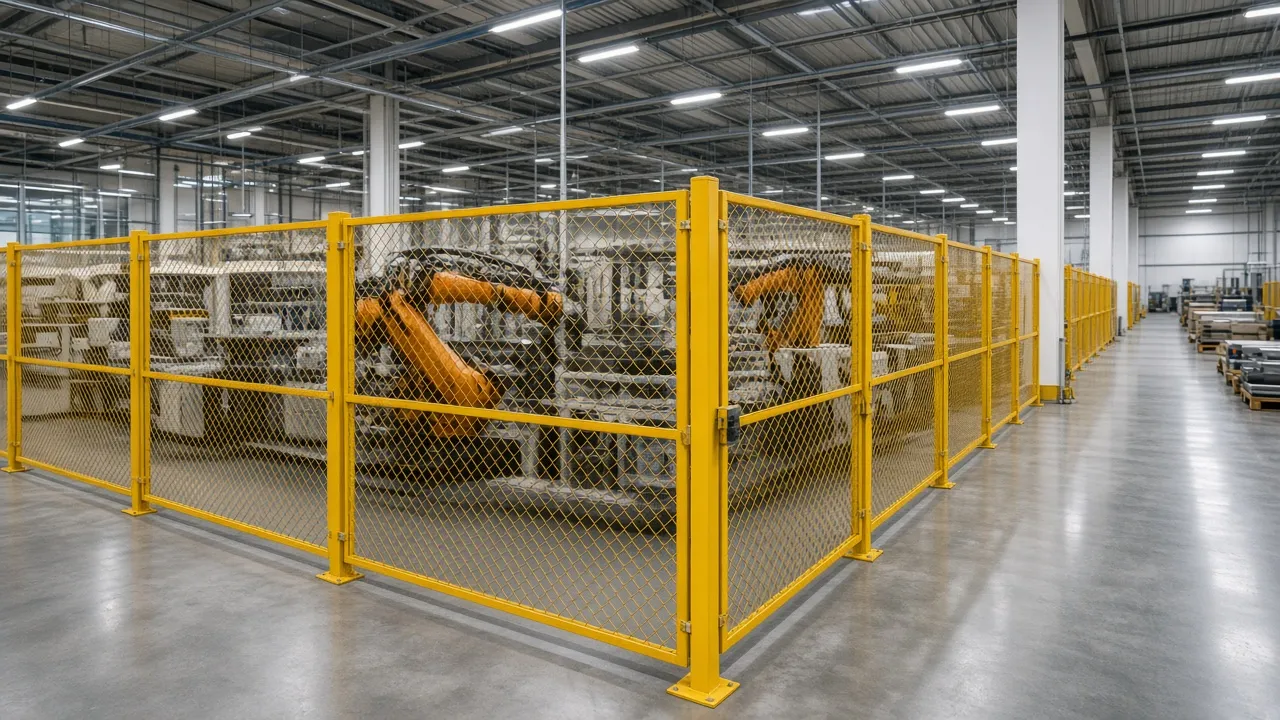
A robot tending cell may need the operator to enter the enclosure many times per shift. A single swing gate with a robust latch and a safety-rated interlock is often the cleanest solution if there is room for the door to open fully. The reset should remain outside the hazard zone, and the control system should be arranged so restart cannot occur until the gate is secured and the cell is clear.
Example 2: CNC machining station with chip and coolant exposure
A CNC cell sees chips, coolant, and repetitive access. In that environment, a perimeter with polycarbonate or mixed guarding and an interlocked access gate is often a better fit than a plain open frame. The gate hardware should resist contamination and keep the actuator protected from spray and debris.
For material selection around this kind of cell, see polycarbonate machine guard panels and our guide to wire mesh vs polycarbonate vs sheet metal guards.
Example 3: Material handling aisle with pallet access
An automated material handling line may need wide access for pallets, carts, or service equipment. A sliding gate or a double swing gate can be the right answer if the opening path is kept clear and the hardware is sized for the traffic pattern. In these cases, gate width and traffic control matter as much as the interlock itself.
See our material handling guarding solutions for layouts that include wide gates and access points for AS/RS, shuttles, and transfer equipment.
Verification checklist before ordering
Use this checklist before you release a gate package for fabrication or purchase:
- Hazard identified and documented.
- Applicable standards reviewed for the current edition.
- Gate type selected for the actual access pattern.
- Latch chosen to keep the leaf stable and aligned.
- Interlock chosen for the required safety function.
- Locking or non-locking behavior confirmed by risk assessment.
- Reset location placed outside the hazard zone.
- Escape release or lockout needs confirmed.
- Safety distance and reach checked together.
- Tamper and bypass risks reviewed.
- Maintenance access and inspection access confirmed.
- Nearby obstructions, traffic paths, and floor conditions reviewed.
If the gate has not been laid out in context, stop and review the layout before ordering. A 2D or 3D review catches clearance conflicts, opening direction problems, and access issues much earlier than a field fix.
Send your machine layout, CAD file, or basic dimensions to our engineering team, and we can review access points and safety distances before you buy. ZYD Technology supports U.S. buyers with layout review and commercial follow-up, and you can start the process at Engineering or by submitting a quote request.
Why this checklist matters in real plant use
A machine guarding safety gate interlock should not only meet a drawing requirement; it should still work after months of vibration, contamination, misalignment, and daily use. The best result comes from selecting the gate style, latch, interlock, and access-control method as one system, then verifying the layout against the hazard and the safety distance before fabrication.
If you are comparing options for a new or revised perimeter, send your layout, CAD file, or basic dimensions for a guarding proposal. We can help you check the access points, gate type, and opening strategy before you commit to hardware.