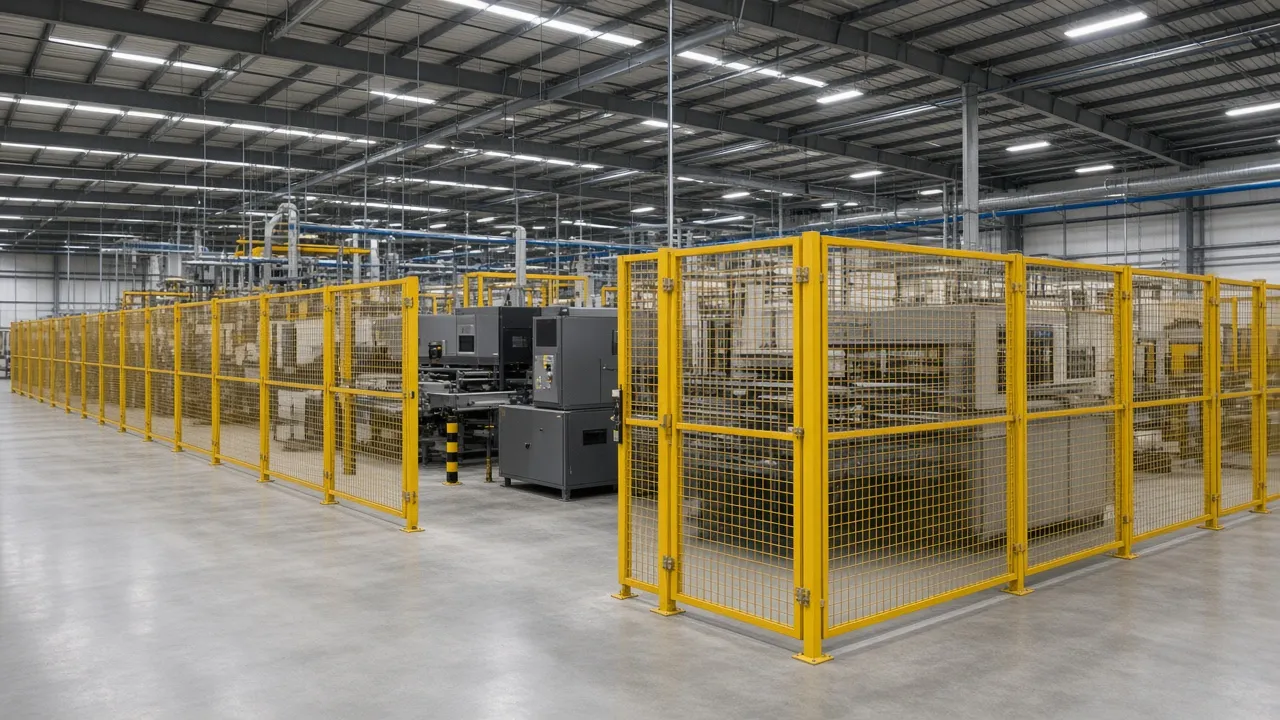
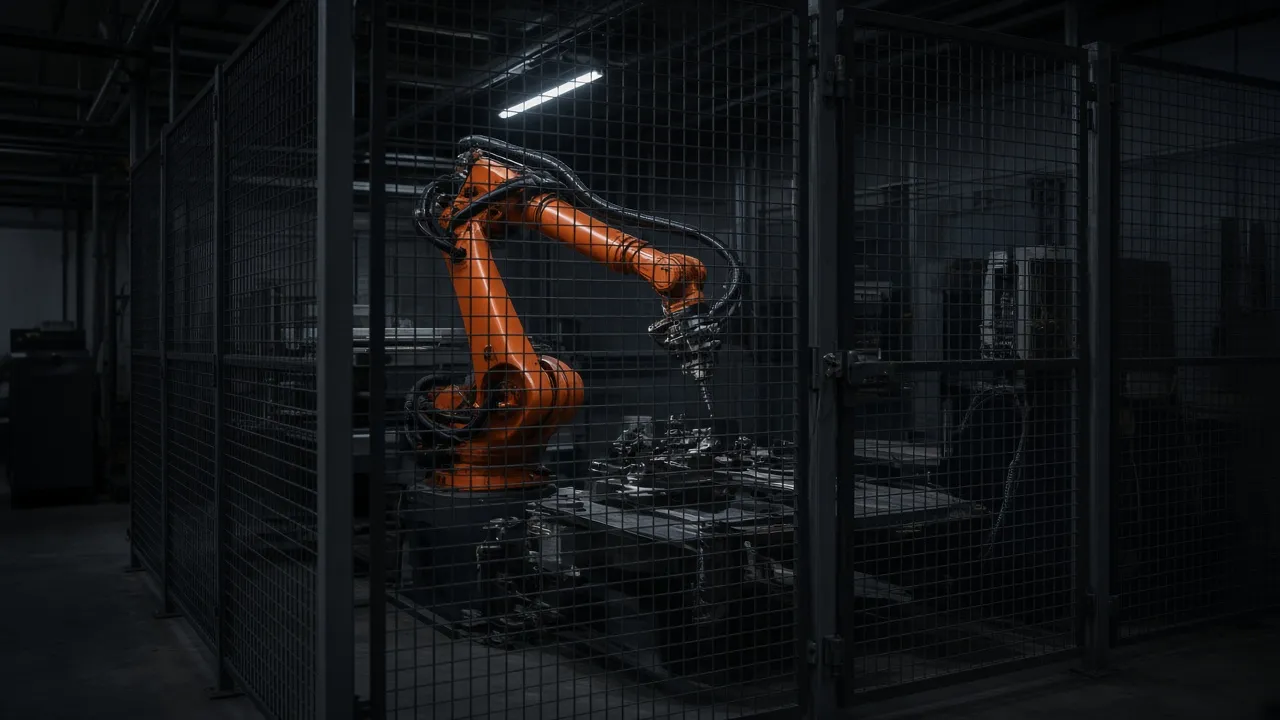
Robot cell safety fence access control means matching each entry point to the task it serves, then deciding whether that opening should be a fixed panel, an interlocked gate, or a lockable maintenance access point. The right setup depends on who enters, how often they enter, what hazards are present, and how the cell must stop and restart.
That is why the gate is not just hardware. It is part of a safeguarding system that includes layout, safety distance, restart logic, and documented risk assessment. If those pieces do not work together, people find workarounds.
Robot Cell Safety Fence Access Control: What It Has to Solve
Most robot cell guarding failures are not caused by the absence of a fence. They come from poor decisions about access. A cell may need one opening for routine operator intervention, another for maintenance, and a separate path for material flow. Each opening can require a different control method.
In practice, access control has to solve five problems:
- Routine operator entry for part loading, inspection, and jam clearing.
- Maintenance access for service, troubleshooting, and component replacement.
- Teaching and recovery access for programming or fault recovery.
- Material transfer access for pallets, carts, or conveyors.
- Emergency entry and safe egress.
Those decisions should be made under a documented risk assessment by a qualified person. Relevant standards typically include OSHA 29 CFR 1910.212, 1910.217, and 1910.219; ANSI/A3 R15.06; ISO 12100; ISO 14119; ISO 14120; ISO 13849-1; ISO 13855; and ISO 13857. The current edition of each standard should be checked during design.
Start with the Job, Not the Gate
Before choosing a gate, define the work that requires entry. Then classify each task by frequency and by the hazard state expected when a person enters the cell.
Identify Every Reason a Person Enters the Cell
- Routine operator intervention: part loading, part removal, inspection, or normal jam clearing.
- Maintenance and troubleshooting: repair, lubrication, sensor work, or device replacement.
- Teaching and recovery: pendant use, program changes, or fault recovery.
- Material movement: pallets, conveyors, carts, or forklift handling.
- Emergency access: rescue, reset, or unexpected recovery work.
Classify Access by Frequency and Risk
Frequent access usually calls for a more ergonomic opening and a simpler operating sequence. Infrequent service access usually calls for stricter control, including lockable access and formal energy isolation. If a task happens every shift, the design should support that workflow instead of forcing operators to defeat the fence.
| Access task | Frequency | Typical hazard state on entry | Common control approach |
|---|---|---|---|
| Routine inspection | High | Motion stopped | Interlocked gate with controlled restart |
| Jam clearing | Medium | Motion stopped, residual energy checked | Interlocked gate with safe stop logic |
| Maintenance and service | Low | Power isolated, stored energy verified | Lockable guard with lockout/tagout support |
| Teaching and recovery | Low to medium | Reduced speed or safe teach mode | Access controlled to the validated teach method |
| Material transfer | Continuous or frequent | Personnel excluded from hazard zone | Dedicated opening or guarded transfer interface |
Choose the Right Access Strategy for Each Opening
Fixed Panel, Gate, or Service Opening?
Use fixed panels wherever people do not need routine entry. Use a gate where a person must enter the perimeter. Use a dedicated transfer opening for parts, pallets, or material flow instead of making people walk through a pedestrian opening when the cell does not require it.
A modular perimeter should be arranged so it closes without cutting or welding on site whenever possible. That makes the layout easier to fit, revise, and document. For most projects, a perimeter design starts with the whole access path, not with a single door.
Single Swing, Double Swing, Sliding, or Folding Gate?
The opening should match the footprint and the traffic pattern, not the other way around.
- Single swing gates: Simple and familiar, but they need clear swing space.
- Double swing gates: Useful for wider access where one leaf would be too long or awkward.
- Sliding gates: Good where swing clearance is limited or aisles are tight.
- Folding or telescopic gates: Helpful in compact layouts where every inch of aisle space matters.
Review available options on our Safety Gates page, and see how those gate choices fit into broader robot cell guarding layouts.
When a Wide Opening Is a Bad Idea
A wide opening can be necessary for pallets, tools, or maintenance access, but it also makes bypassing easier if the layout is poorly controlled. Large openings need clear rules, proper interlocking or locking, and enough physical separation that people cannot casually step around the intended access path.
Wide material openings are common in applications such as palletizing and warehouse automation. See our palletizing guarding and warehouse and material handling guarding pages for examples where access and material flow must be separated carefully.
Interlocked Access: What It Should Do and What It Should Not Do
An interlocked gate is usually arranged so that opening the gate places the machine in a safe state, as defined by the risk assessment and validated safety function. That may mean a controlled stop, a removal of enabling conditions, or another verified safe response depending on the hazard.
What it should not do is leave the rest of the cell accessible while motion continues. If the hazard does not stop quickly enough, or if stored energy remains hazardous, guard locking may be required until the safe condition is verified. ISO 14119 is the standard commonly used for guard interlocking arrangements, but the current edition should always be checked during design.
Interlock behavior also depends on the hazard source. A robot, conveyor, rotary axis, positioner, or stored pneumatic energy may each require a different stop strategy. A single “gate opens, everything stops” rule is too crude for real cells.
Interlock Versus Door Monitoring Versus Lockable Guard
- Interlock: opening the gate removes the operating condition that allows hazardous motion.
- Door monitoring: confirms gate status, but by itself does not solve the hazard.
- Lockable guard: keeps the gate closed until the safe condition exists or until the required release sequence is complete.
A lockable gate is often appropriate when the stop time is long, the hazard includes stored energy, or the maintenance task requires positive isolation before entry.
Where Interlocks Are Not Enough
- Run-down time is long enough that the hazard remains active after the gate opens.
- Gravity or trapped energy can move a part after power is removed.
- The cell includes multiple hazard sources that do not stop together.
- The task requires service while the machine is de-energized and verified safe.
For gate hardware details, see our Safety Gate Handle Set page. Depending on the configuration, an integrated handle set may include door handle functions, escape release, LOTO capability, reset, permission, and emergency stop controls for interlocked gates.
Lockout/Tagout and Access Control Are Related, But Not the Same
Perimeter access control manages who can enter the cell and under what condition. Lockout/tagout manages hazardous energy during servicing and maintenance. A good fence design supports both, but one does not replace the other.
Do not assume an interlocked gate alone is sufficient for service work. If a technician must work on components, clear a jam, replace tooling, or enter near stored energy, the cell should support a documented lockout sequence. The fence should make that sequence easier, not harder.
Rule of thumb: if the task is normal production intervention, think access control. If the task is servicing, think lockout and verification first.
Layout Decisions That Make Access Control Work
The best access point is the one that aligns with the actual job. If operators need to reach one side of a robot, place the gate there. If maintenance works on a different side, give them a different opening. A poorly placed gate encourages people to bypass the intended path.
Check the full entry path, not just the door leaf. Swing clearance, sliding travel, aisle width, pallet routes, and forklift traffic all affect the final layout. A gate that opens into a travel lane creates a new hazard even if the interlock is correct.
Also protect every other opening. Temporary holes for cables, hoses, or conveyors can become permanent access risks if nobody revisits the layout after installation.
Material and visibility requirements should also shape the perimeter. For general robot cells, mesh often works well. For welding, chips, or coolant, different panel types may be better. See our Products page and these application-specific pages:
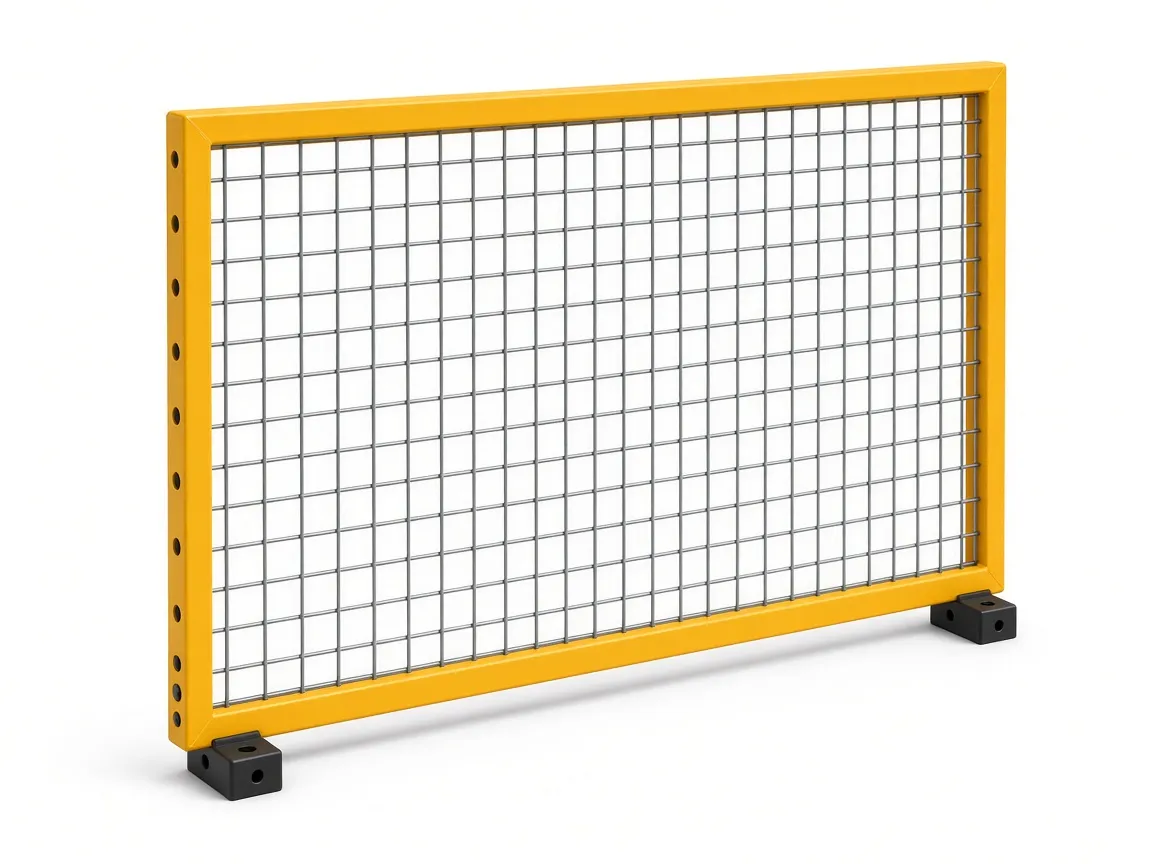
- Wire Mesh Panels (D Series) for general-purpose visibility and containment.
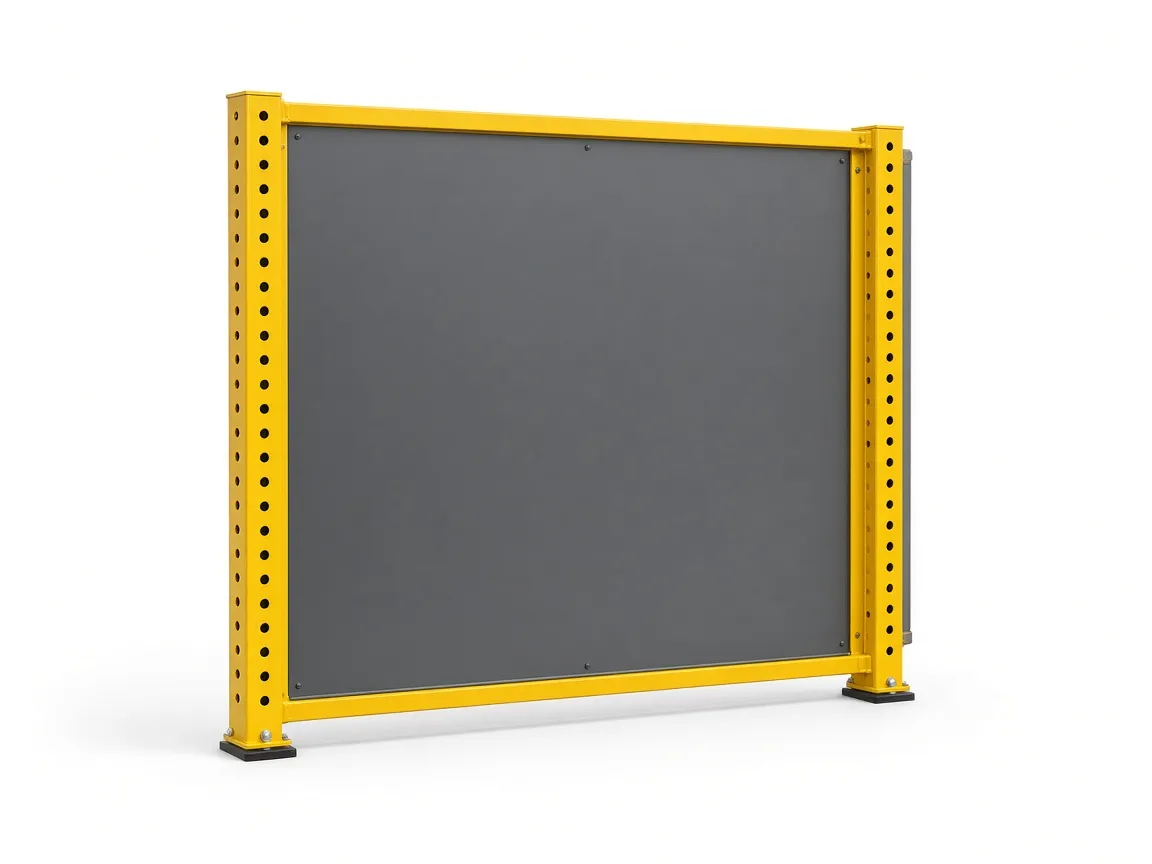
- Sheet Metal Panels (SM Series) for welding cells, spatter, chips, and noise control.
- Polycarbonate Panels (PC Series) where visibility and impact resistance are both important.
For process-specific examples, review welding cell guarding and CNC machine guarding.
Safety Distance and Opening Size Still Matter
A good gate does not fix a fence that is too low, too open, or too close to the hazard. Reach-over, reach-through, and reach-around risks still need to be checked against the actual cell geometry and the applicable standard. That is why layout review is part of access control, not a separate step.
Our Machine Safety reference explains how fencing is selected and positioned under EN ISO 12100, ISO 14119, ISO 14120, ISO 13855, ISO 13857, and ISO 13849-1. For opening-size and reach-distance examples, see ISO 13857 Safety Distance: How to Size a Machine Guard Fence. For light curtain calculations that sometimes influence gate and opening placement, our Safety Distance Calculator explains ISO 13855 and ANSI B11.19 formulas.
Common Robot Cell Footprints and the Access-Control Pattern That Fits Each One
Small Standalone Robot Cell
A small cell often needs one primary operator gate and fixed panels on the other sides. The key is to keep the access path short and obvious, then make the restart sequence clear and consistent.
Large U-Shaped or L-Shaped Cell
These layouts often need different access points for operators and maintenance. One side may support production intervention, while another supports service work. Splitting the access points can reduce travel and improve discipline.
Palletizing Cell
Palletizing cells often need wide access for pallets, forklifts, or staging equipment. That makes access control more complicated because material flow and personnel entry can collide. The solution is usually a protected material opening plus a separate pedestrian gate, not one large uncontrolled entrance.
Conveyor-Fed Cell
Conveyor infeed and outfeed points often create the most awkward openings in the perimeter. Those transfer points need special attention because they can invite reaching through or stepping into the zone to clear a jam. See our conveyor guarding page for layout ideas around transfer points and openings.
Machine Tending or CNC Cell
Machine tending often requires visibility, chip containment, and a clear access path for part changeout or maintenance. Polycarbonate panels can make sense where operators need to see the process while staying outside the hazard zone. For this application, review CNC machine guarding.
A Practical Decision Checklist for Plant Engineers
Use this checklist when specifying access control for a new or retrofitted robot cell:
- Who needs entry, and for what task?
- How often will the opening be used?
- Should the opening be a fixed panel, gate, or dedicated transfer point?
- Does the gate need to be interlocked, lockable, or both?
- Can the hazard stop quickly enough for an interlock alone?
- Is stored energy present, requiring lockout/tagout support?
- Will the gate direction, swing radius, or sliding path interfere with aisles or pallets?
- Are there any adjacent openings that create a bypass route?
- Can anyone reach the hazard from outside the fence by stepping over, around, or through another opening?
- Has a qualified person completed and documented the risk assessment?
If you are writing a new equipment specification, this is a good place to cross-check a broader machine guarding checklist and a machine guarding fence layout checklist.
What to Specify in an RFQ or Layout Review
When you request a proposal, be specific about access control. Include the number and location of openings, the gate type at each opening, whether each gate is interlocked or lockable, and whether any gate needs escape release, reset, or emergency stop functions. Note the direction of travel, clear opening width, and any conflicts with pallets, conveyors, or forklifts.
Clear input leads to a better layout review. If you send a layout, CAD file, or basic dimensions, our engineers can review the access points and safety distances before you order. Use Engineering to send your layout for a 2D or 3D guarding proposal, or go straight to Request a quote.
For RFQ structure and component selection, see Industrial Safety Fencing: How to Specify Panels and Gates for an RFQ.
Final Takeaways
Robot cell safety fence access control works best when it is designed around the task, not the door. Match the gate to the access frequency, match the stop or lock behavior to the actual hazard, and verify the layout against safety distance and restart requirements. A documented risk assessment should confirm the final design before the cell is built or released.
If you need a second set of eyes on the layout, send your drawing, CAD file, or basic dimensions. ZYD Technology can review the access points and return a guarding layout before you order.