
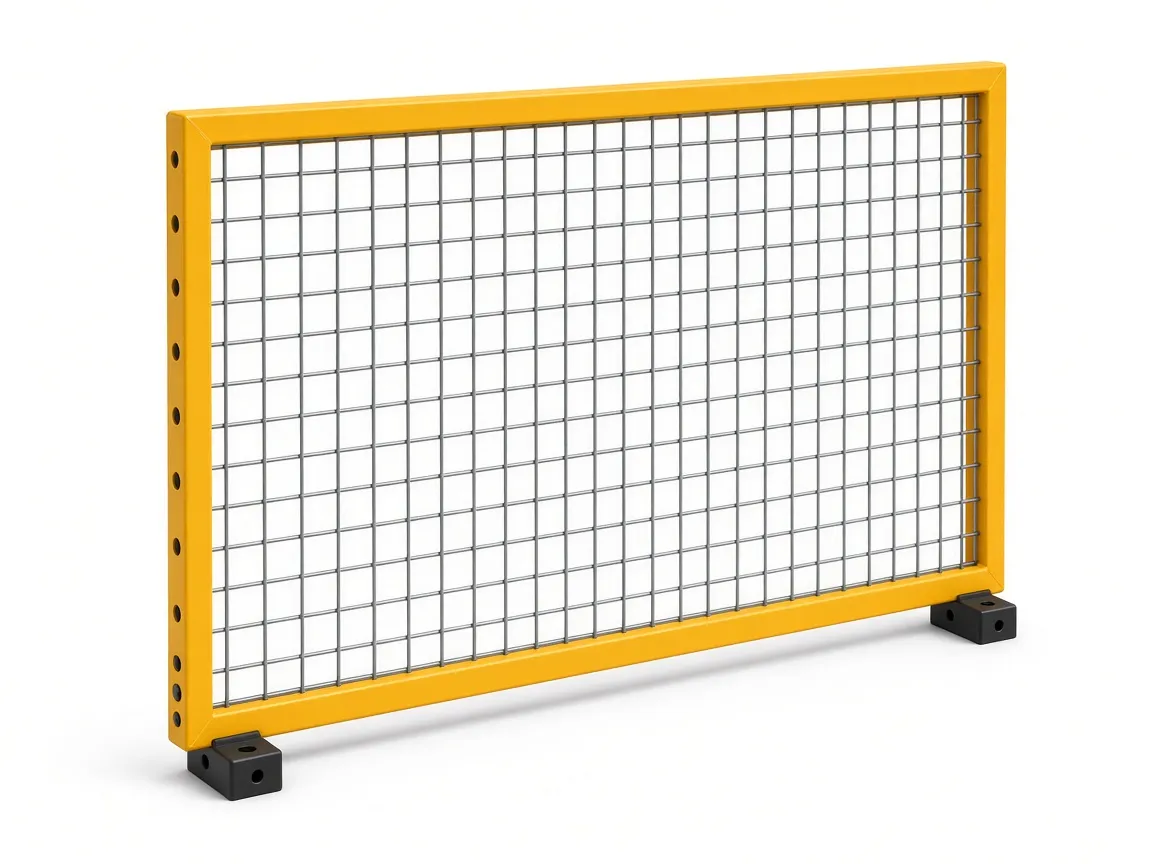
 D Series
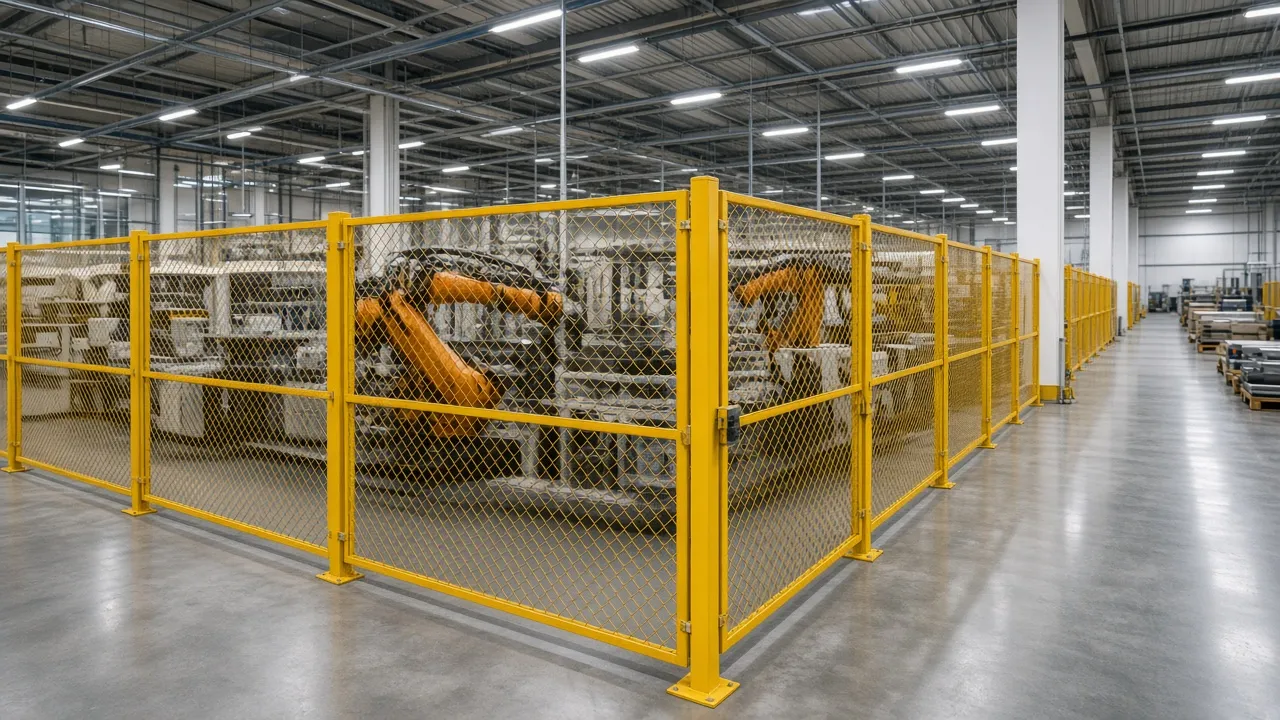
Applications
Palletizing cell guarding
Tall perimeter fencing, wide gates for pallets and forklifts, and protected pallet exits for robotic palletizing and depalletizing.
Palletizing Guarding
Big openings, forklifts and high loads.
Palletizing cells are hard to guard: pallets must leave the cell while it runs, forklifts work right at the fence line, and the robot moves heavy cases high above the floor. The perimeter is usually tall and well anchored, pallet openings use light curtains or scanners with muting, and wide swing, folding or wheel-mounted sliding gates give forklift access.
What we configure
- Tall perimeter fence around the robot's reach with load
- Wheel-mounted sliding or folding gates for forklifts
- Openings prepared for muting light curtains
- Interlocked access for jam clearing
Good practice
- Two pallet stations separated by a guard
- Posts anchored against forklift contact
- Slip sheets refilled from outside the fence
Recommended products
Products for palletizing.
D Series
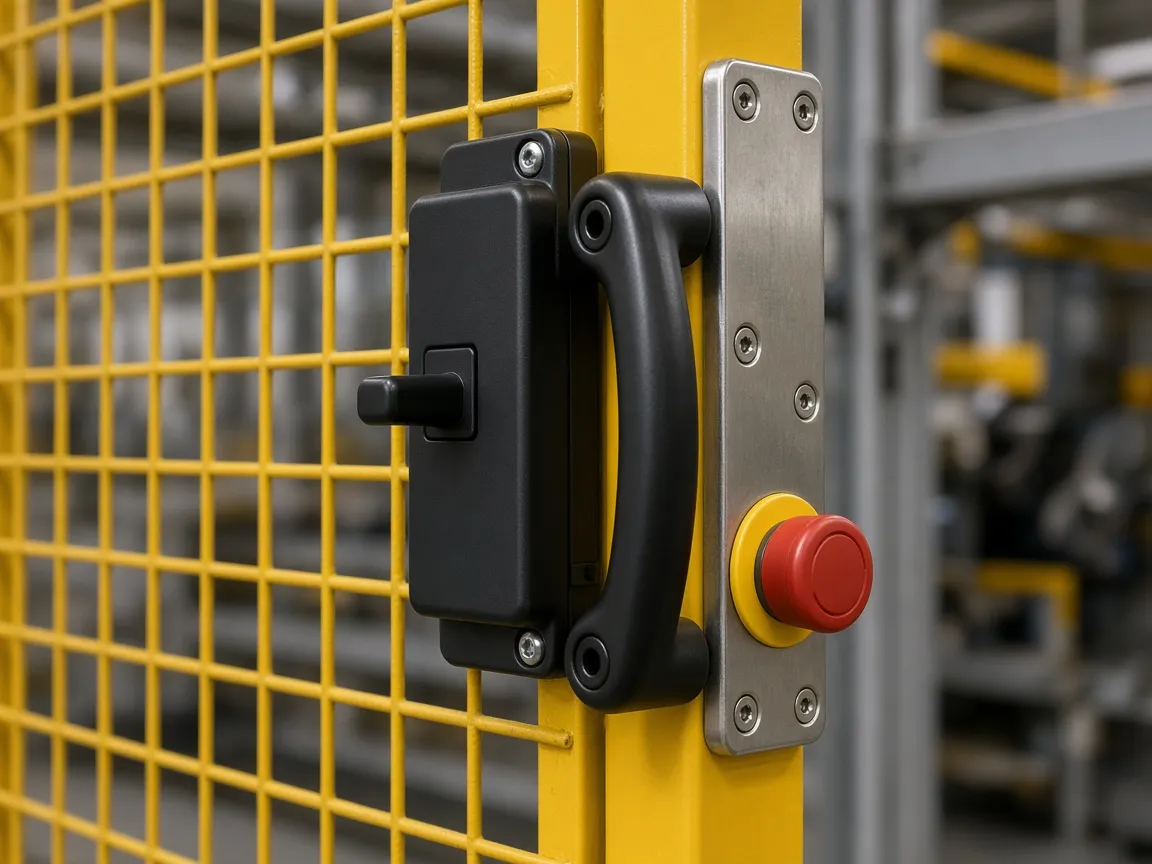 Gates
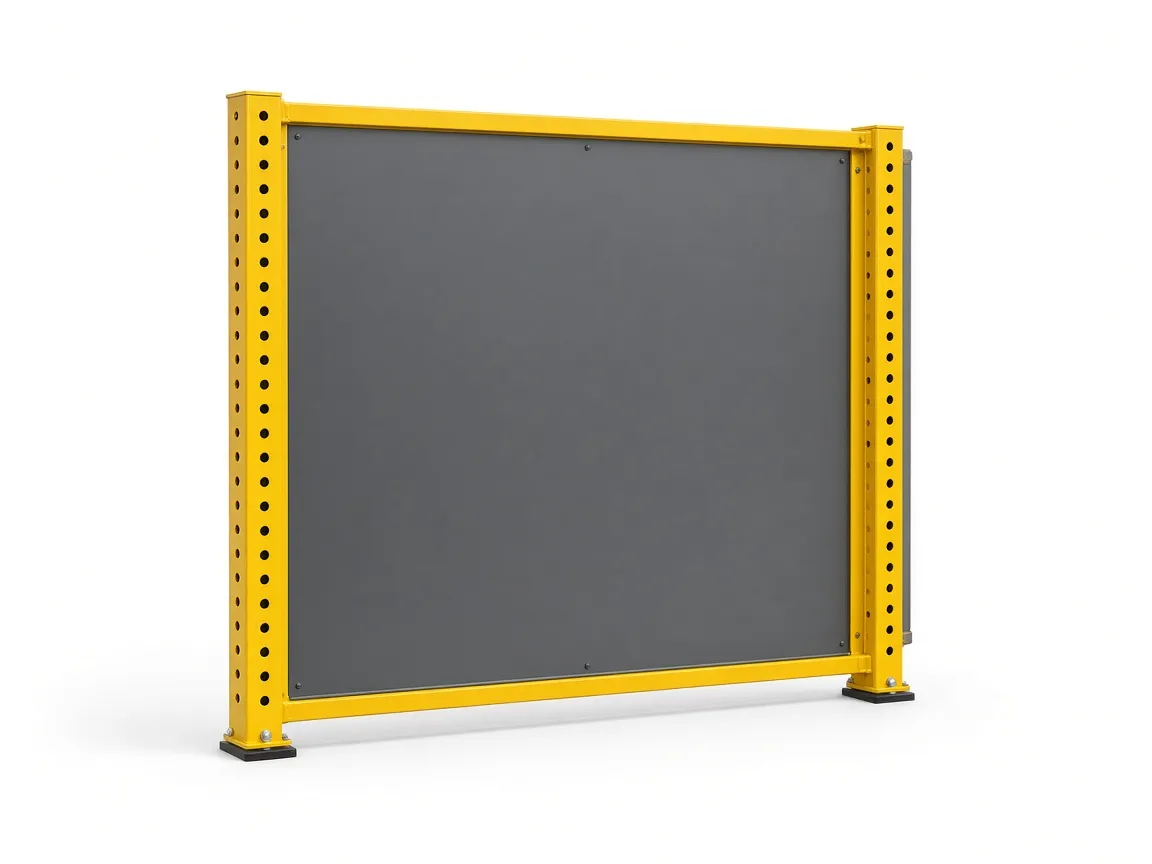 SM Series
FAQ
Frequently asked questions
How do pallets leave a guarded palletizing cell?
Through an opening protected by a light curtain or scanner with muting: sensors recognize the pallet and mute the curtain while it passes, while a person entering through the same opening still stops the robot.
Which gate is best for forklift access?
A wheel-mounted sliding gate needs no floor rail and has no connection on the gate, so forklifts pass freely. Folding and double swing gates also give wide openings.
How tall should a palletizer fence be?
Robot palletizers usually use tall fences because the robot handles loads above head height. The height and distance are checked against ISO 13857 for the highest point the robot and its load can reach.
Send us the layout.
Share a layout, a sketch or a few dimensions and we will propose the guarding for your palletizing guarding.