Polycarbonate machine guards are the right choice when you need a clear perimeter that lets operators, maintenance staff, and supervisors see the process while still helping contain chips, coolant, and small parts. They are usually a poor fit where the cell needs maximum scratch resistance, stronger sound reduction, weld flash containment, or the lowest-cost opaque barrier.
If you are deciding between clear, mesh, and sheet metal guarding, start with the hazard and the task. The best panel is the one that supports the work without creating a new risk, and that decision should be confirmed in a documented risk assessment by a qualified person.
What polycarbonate machine guards do well
Clear guarding is most useful when visibility is part of normal operation. Operators can watch part flow, confirm a workpiece is seated correctly, verify robot motion during setup, and spot jams or coolant issues without opening a gate. That reduces unnecessary stops and makes recovery faster when something does go wrong.
In many machine tool applications, clear panels also help contain chips, coolant, and small parts. They are not a substitute for proper machine design or safe separation, but they can be a practical barrier when the debris hazard is moderate and line-of-sight matters.
Visibility is also valuable during maintenance and first-piece checks. Instead of leaning into a work zone or opening access repeatedly, technicians can observe the process from outside the safeguarded area and decide whether intervention is actually needed.
Where clear guarding is a strong fit
Polycarbonate machine guards are often a good fit for CNC machine tending, robotic machining, trimming, transfer points, and inspection-heavy cells. In those environments, the ability to see the process can improve uptime, support quality checks, and make troubleshooting less disruptive.
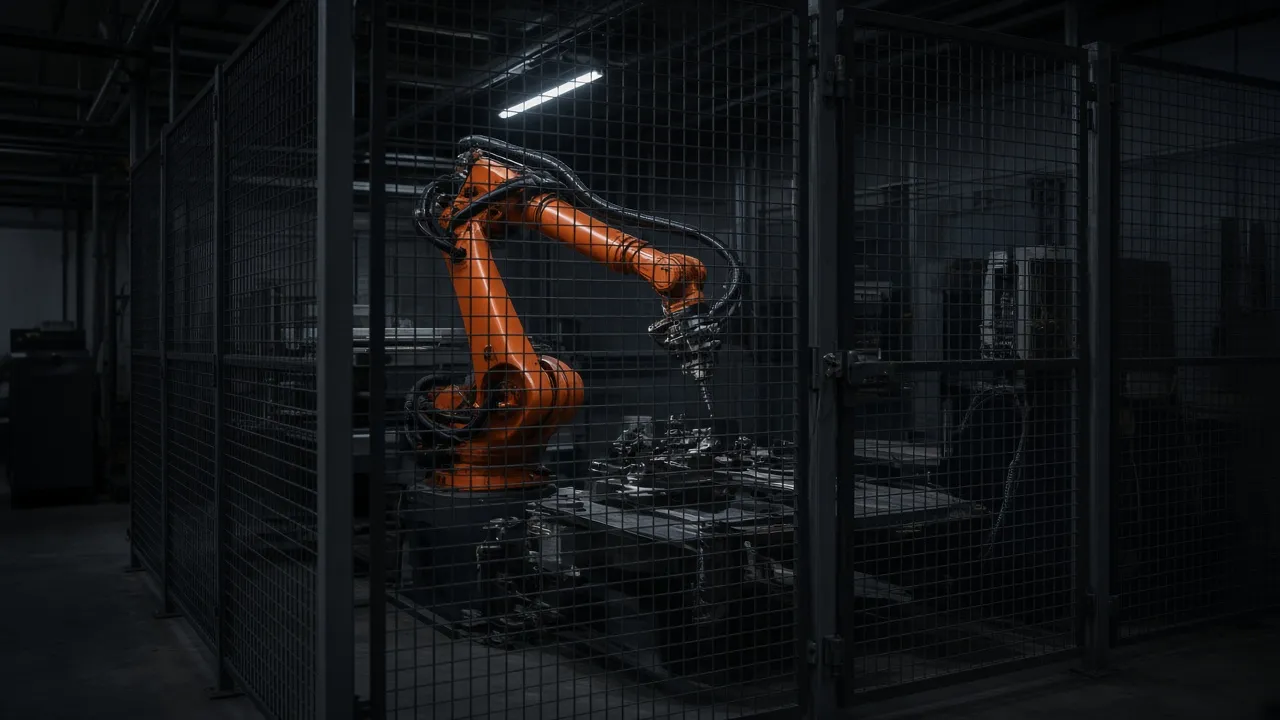
A common example is a CNC cell where an operator needs to verify chip evacuation, coolant spray, and part ejection. Clear panels let the team see the condition of the process without compromising the perimeter. That is why CNC machine guarding for machine tools and robot tending is one of the most common use cases for polycarbonate.
Clear guarding can also help in conveyor sections and automated transfer zones where jams tend to happen at the same points every shift. If the problem is visible, the fix is usually faster and more controlled.
Where clear guarding is usually the wrong choice
Clear panels are usually a poor primary choice near welding, grinding, or any process that produces heavy spatter, hot debris, or intense heat. In those zones, the surface can be damaged quickly and visibility can be lost to haze, pitting, or residue.
If the goal is better acoustic control, sheet metal generally does a better job than clear plastic. If the goal is airflow, lower cost, and high wear resistance, mesh is usually the better default. If the goal is to block flash, chips, and splash, opaque panels often make more sense than a clear panel that must be cleaned constantly.
That is why many plants use clear panels only where they add value, rather than across the full perimeter.
Polycarbonate machine guards vs. mesh vs. sheet metal
The right material depends on what the guard has to do every day. A single material is not always the best answer. In many layouts, the most practical solution is a mixed-material perimeter that uses clear sections only where visibility is worth the trade-off.
| Material | What it does best | Main trade-offs | Typical best-fit use |
|---|---|---|---|
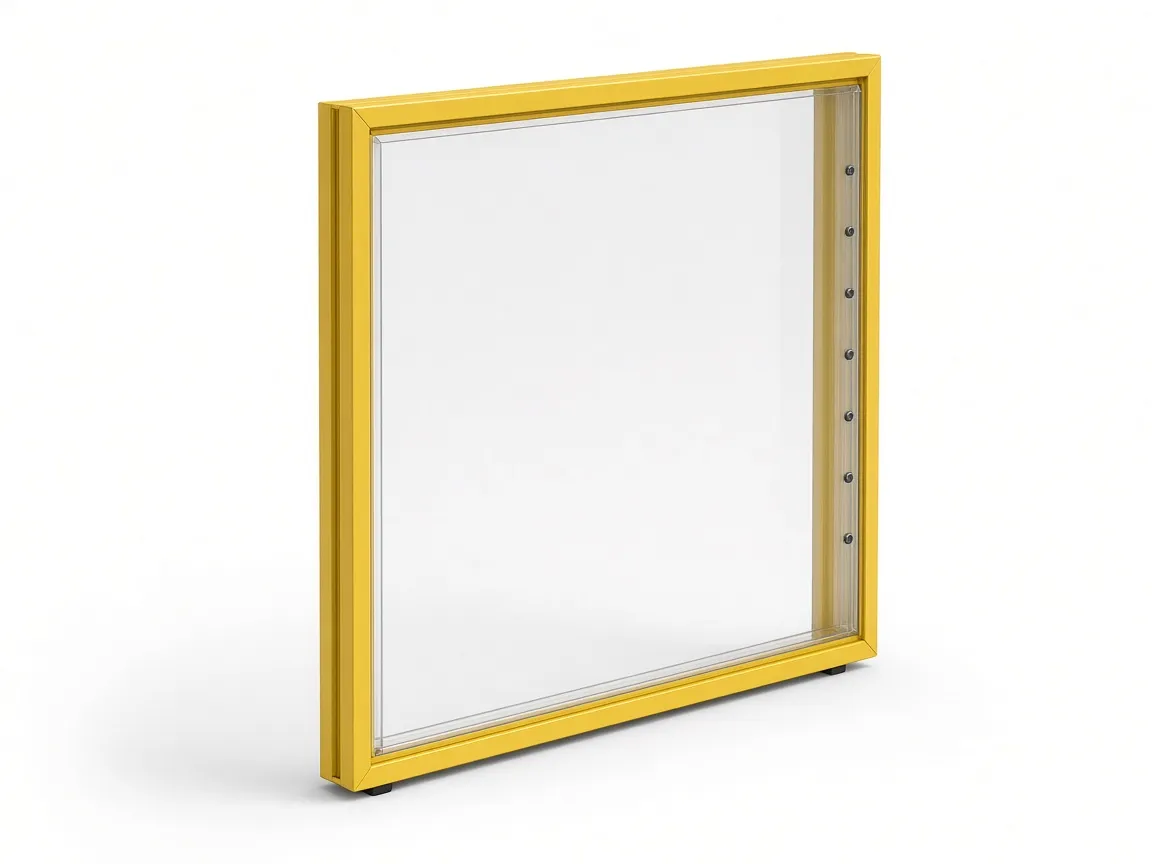
| Polycarbonate | Full line-of-sight visibility, chip and coolant containment, clean operator viewing. | Can scratch and haze over time, may need more careful cleaning, chemical compatibility must be checked. | CNC tending, inspection zones, robot setup areas, transfer points, viewing windows. |
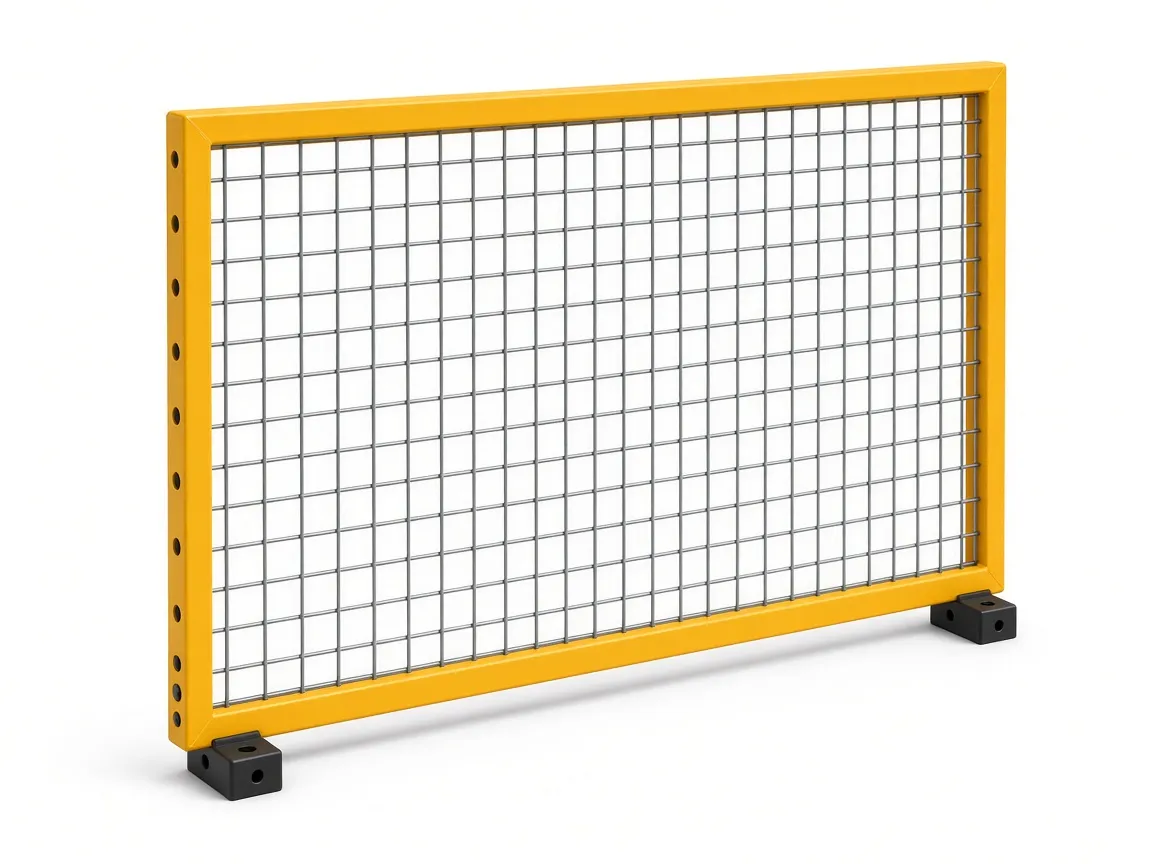
| Wire mesh | Airflow, durability, cost efficiency, good everyday wear resistance. | Does not stop chips, coolant, or splash; visibility is partial, not full. | General robot perimeters, palletizing cells, warehouse and material handling barriers. |
| Sheet metal | Blocks flash, chips, splash, light, and some noise; robust in harsh zones. | No visibility through the panel, heavier visual isolation, less open feel. | Welding cells, chip-heavy processes, splash zones, privacy or noise-sensitive areas. |
If you want a broader overview of how these materials fit into a full perimeter, the modular machine guarding product line with mesh, sheet metal, polycarbonate panels, and safety gates shows how mixed layouts are typically built.
For example, a CNC cell may use clear panels along the operator side, mesh on a long rear run, and solid sections near the chip discharge area. A welding cell may use sheet metal where spatter is concentrated and mesh only where operators need a distant view of the process. The material choice should follow the hazard, not the other way around.
What to verify before you specify clear panels
Before you write polycarbonate into a spec, complete a documented risk assessment. OSHA machine guarding requirements in OSHA 29 CFR 1910.212 set the basic expectation that hazardous machine points must be guarded, but they do not tell you which panel material to choose. That choice comes from the hazards, the task, and the layout.
The following standards are commonly relevant, depending on the application: ANSI B11.0 and ANSI B11.19 for risk reduction and safeguarding; ISO 12100 for risk assessment principles; ISO 14120 for guard construction; ISO 14119 for interlocks; ISO 13855 and ISO 13857 for safety distances and opening sizes; and ANSI/A3 R15.06 and ISO 10218-1/-2 for robot cells. The current edition of each standard should be checked during design.
Use the risk assessment to answer a few practical questions:
- What is the hazard the panel must contain: chips, coolant, small parts, flash, or something else?
- Does the operator need full visibility, or would a few viewing windows be enough?
- Will the panel see frequent contact with oils, coolants, washdown chemicals, or solvents?
- Will glare, reflections, or poor lighting reduce visibility in the actual cell?
- How often will maintenance staff clean the panel, and with what tools?
- Do gates, openings, and interlocks control access correctly even if the panel is transparent?
- Are the safety distances and opening sizes appropriate for the machine and the task?
A clear panel does not make a risky opening safe by itself. If a gate is poorly placed or an opening is too large, the material choice does not solve the access problem. That is why guarding layout, gate selection, and interlock design must be reviewed together.
A practical decision rule
If you need visibility with moderate chip, splash, or small-part containment, clear guarding is often worth considering. If you need airflow and everyday durability, mesh is usually the better default. If you need to block flash, chips, splash, or noise, sheet metal is usually the better base material.
That is the simplest way to think about the selection: choose the panel that solves the main problem, then verify that the rest of the guarding system still meets the risk-reduction goal.
Selection examples from real plant layouts
CNC machine tending: Clear panels are useful because operators can see part load, chip buildup, and coolant behavior. The challenge is to keep the view clean over time. If the process throws heavy chips or mist directly at the panel, consider a layout that uses clear sections only at the operator viewing side and tougher materials elsewhere.
Conveyor guarding: If a transfer point jams repeatedly, visibility can shorten downtime. A clear section at the problem point may be better than opening the entire perimeter. For a broader conveyor layout, modular conveyor guarding for transfer points and automated cells can be configured with different panel types in the same run.
Welding-adjacent equipment: Clear panels are usually not the right primary guard close to spatter and heat. Opaque panels are often better near the source, with visibility handled by a more protected viewing area farther away. If your cell includes welding, see guarding for robotic welding cells with sheet metal panels and mesh visibility zones.
Mixed-material perimeter: This is often the most practical approach. Use polycarbonate where operators need to see the process, mesh where airflow and wear resistance matter, and sheet metal where the hazard is harshest. The material should vary by zone, not by preference.
Cleanup, durability, and lifecycle trade-offs
The biggest lifecycle issue with clear panels is not strength at day one. It is surface condition over time. Scratches, haze, residue, and chemical attack can reduce visibility long before the panel is structurally worn out.
That means cleaning matters. Use a procedure that avoids abrasive pads, rough shop towels, and incompatible solvents. If a plant uses the wrong cleaner, the panel can craze or dull quickly. If glare is already an issue because of bright overhead lighting or sunlit areas, poor cleaning habits will make it worse.
As a practical maintenance check, watch for these signs:
- Hazing that makes the process harder to see
- Fine scratches from dry wiping or abrasive cloths
- Crazing or surface stress marks after chemical exposure
- Yellowing or discoloration from age or UV exposure
- Residual film that creates glare under bright lights
If visibility is critical to safe operation or first-piece checks, plan for eventual replacement of the most exposed viewing sections. That is normal lifecycle planning, not a failure of the material.
A short checklist before you specify polycarbonate
- Identify the main hazard the panel must address.
- Confirm whether full visibility is needed or only at specific windows.
- Check whether chips, coolant, oil, washdown chemicals, or solvents will contact the panel.
- Review whether glare, lighting, or reflections will reduce practical visibility.
- Verify that gates, interlocks, and openings are designed as part of the full safeguard system.
- Check safety distances and opening sizes against the applicable standards.
- Confirm the cleaning method and chemical compatibility before ordering.
- Decide whether a mixed-material perimeter would perform better than a fully clear one.
For teams building a full enclosure from scratch, the machine safety overview is a useful reference for how fencing is positioned, how openings are controlled, and how standards such as EN ISO 12100, 14119, 14120, 13855, and 13857 fit together.
How to specify clear guarding without guessing
If you are working on a new layout, the material choice should come after the process and access points are understood. A good specification starts with the machine map: where operators stand, where maintenance access is needed, where debris travels, and where visibility actually matters.
That is why ZYD Technology reviews layouts, CAD files, or basic dimensions and returns a 2D/3D guarding layout before ordering. If you already know your application, you can also start from the relevant machine family and refine the panel mix from there. For a broader project view, the solutions page for robot cells, conveyors, CNC machines, welding, palletizing, and material handling can help you match the guarding style to the application.
When you are ready to move from concept to layout, request a machine guarding quote and send your layout, CAD file, or basic dimensions. We will help you turn the hazard analysis into a practical perimeter that supports the way the cell runs.