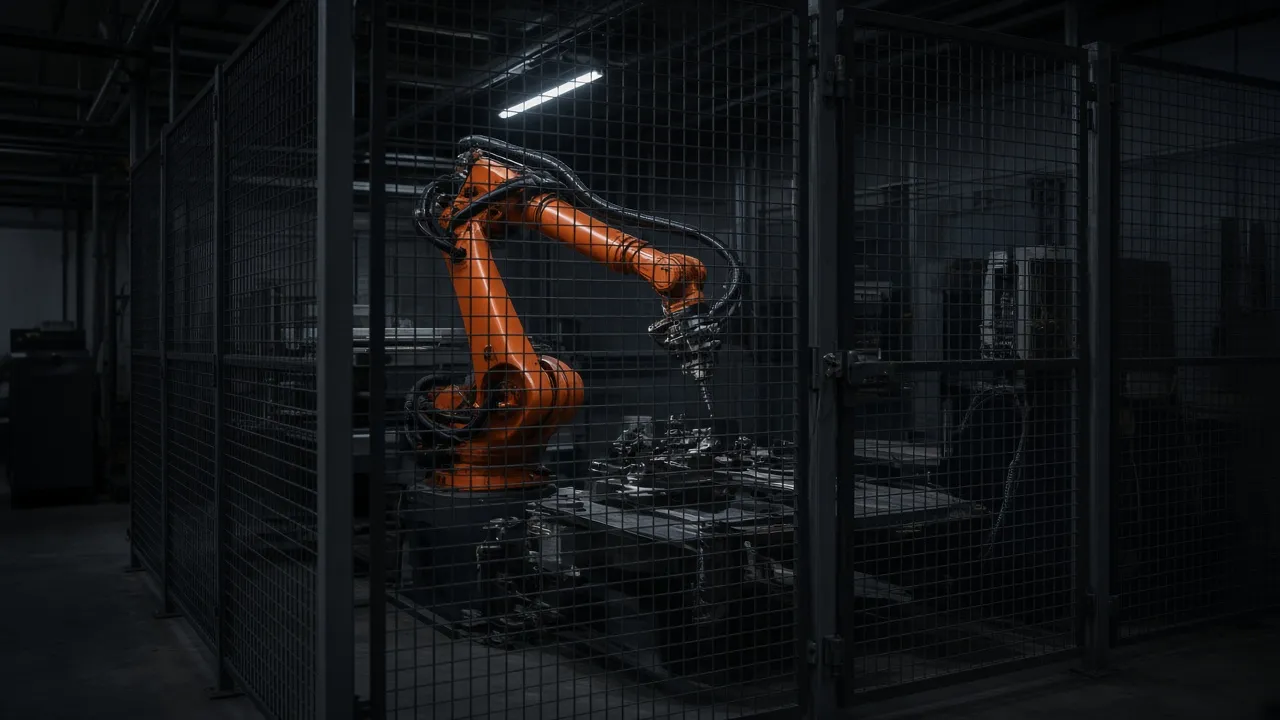
A robot cell safety fence is the perimeter guard that keeps people outside the reach of an industrial robot and its tooling while the cell runs. In the U.S. it is designed to ANSI/A3 R15.06 (the adoption of ISO 10218-1 and -2), with fence height, openings and distance to the robot checked against ISO 13857, and every access point either interlocked or protected by a safeguarding device.
Start with the robot's real reach, not its program
The most common layout mistake is fencing around the path the robot normally follows. The fence must keep people away from the maximum envelope: everything the robot arm, its end-of-arm tooling and the part it carries can reach, plus any hazards from fixtures, turntables and conveyors in the cell.
- Use the robot's maximum reach from the manufacturer's data, including tool and part.
- If the space is tight, the robot's motion can be limited with safety-rated soft axis and space limiting or mechanical stops. The fence then guards the reduced, restricted space.
- Include every other machine in the cell: welding sources, presses, rotary tables, positioners.
Fence height and the gap at the bottom
The 2011 edition of ISO 10218-2, adopted in the U.S. as ANSI/RIA R15.06-2012, called for perimeter guards at least about 55 in (1,400 mm) high with a gap of no more than about 7 in (180 mm) between the floor and the bottom of the fence, in combination with the safety distances in ISO 13857. The 2025 editions restructure the requirements, so check the current text for your project.
In practice most robot cells use taller fences, typically around 7 ft 2 in (2,200 mm). The reason is distance: a taller fence can stand much closer to the robot without anyone reaching over it, which saves floor space. Use the reach-over table in ISO 13857 to confirm the combination of fence height, hazard height and distance for your cell.
Openings, mesh and reach-through
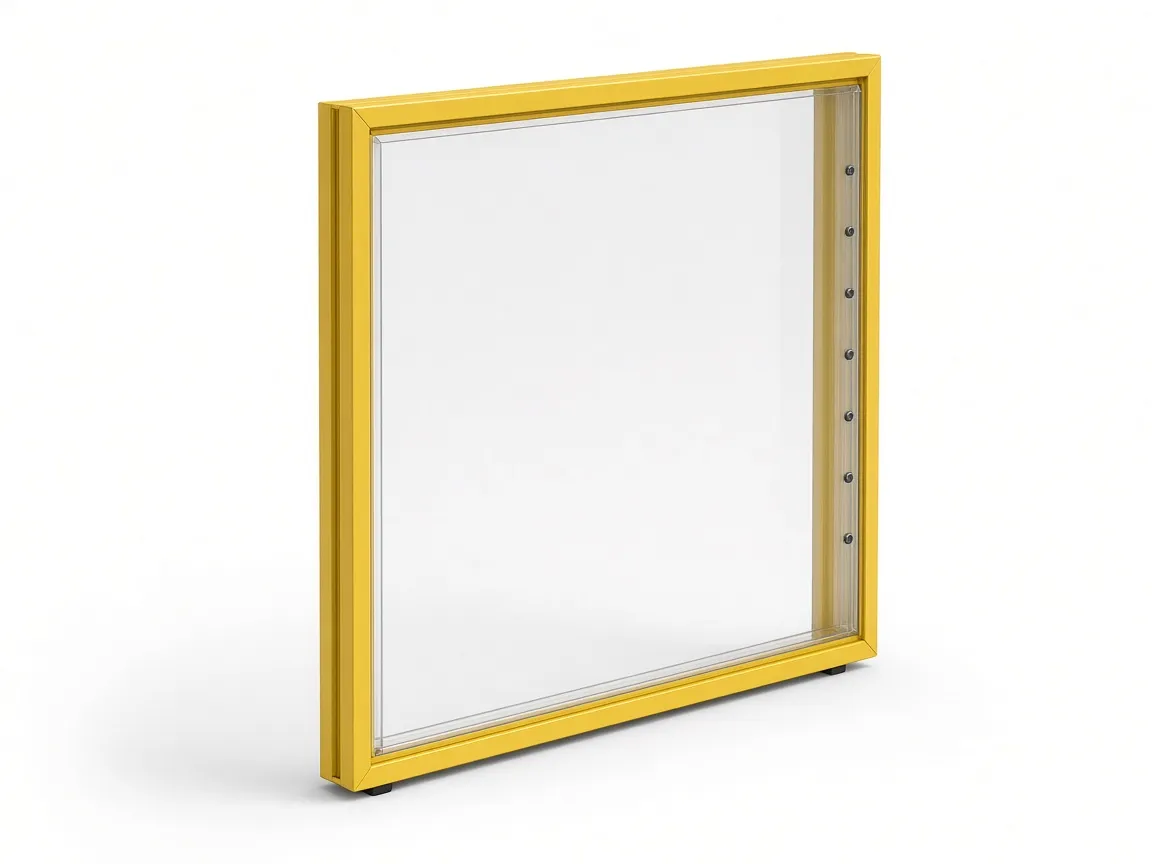
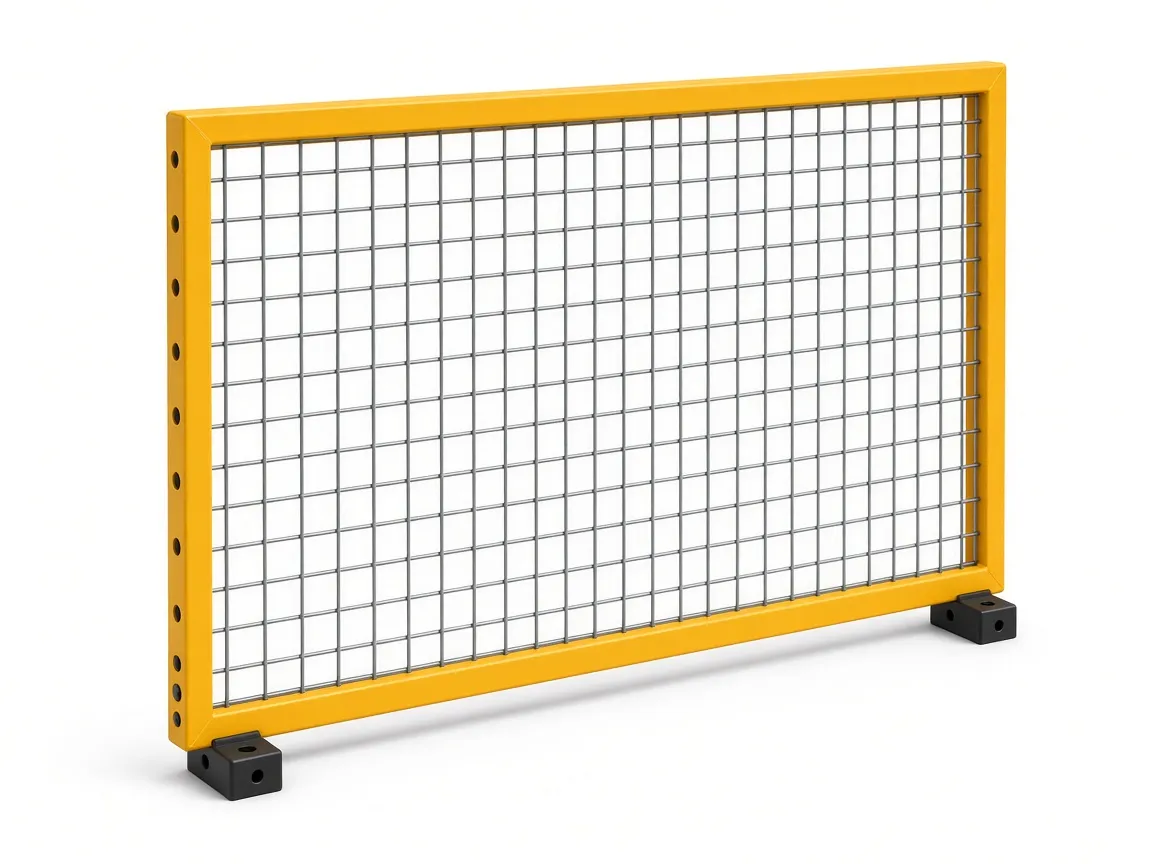
Every opening in a robot fence must be far enough from the hazard that a finger, hand or arm pushed through it cannot reach the robot. ISO 13857 gives the minimum distance for each opening size and shape. Wire mesh panels with a 20 × 100 mm mesh are a common choice: strong, light and easy to see through, as long as the fence stands at least the tabled distance from the robot's envelope. Where the robot works close to the fence, polycarbonate or sheet metal panels remove the reach-through problem.
Check every opening, not just the mesh: gaps between panels and posts, cable pass-throughs, the bottom gap, and openings around conveyors that enter the cell.
Gates and maintenance access
Operators and technicians need to enter the cell for setup, teaching, cleaning and fault recovery. Each entry point must stop the hazard before a person reaches it:
- Interlocked gates: opening the gate stops the robot through a safety circuit with the reliability set by your risk assessment (ISO 13849-1 performance level).
- Guard locking: needed when the robot and other machines take longer to stop than a person needs to walk from the gate to the hazard.
- Escape release: anyone inside must be able to open the gate from the inside without a key or tool.
- Lockout and trapped key: for longer maintenance tasks, combine the gate with lockout so the cell cannot be restarted while someone is inside.
Our safety gates include single and double swing, sliding and folding types, with integrated handle sets that hold the interlock and the escape release.
Material entry and exit points
Parts, pallets and totes must get in and out without opening a door. These openings are the hardest part of the perimeter:
| Opening | Typical protection |
|---|---|
| Operator load station | Light curtain with sufficient safety distance, or a turntable / two-station fixture so the operator never shares space with the robot |
| Conveyor infeed or outfeed | Tunnel guard long enough to keep a reaching arm away from the hazard, or a light curtain with muting |
| Pallet exit (palletizing) | Light curtain or scanner with muting that tells a pallet from a person |
The distance between a light curtain and the hazard follows the ISO 13855 or ANSI B11.19 calculation: the robot's total stopping time multiplied by an approach speed, plus an allowance for the curtain's detection capability. For palletizing cells specifically, see our palletizer guarding guide.
Build quality matters as much as layout
- Anchor posts to the floor; a fence that moves when pushed does not meet the intent of OSHA 1910.212(b) or the standards.
- Panels must withstand a person falling against them and the impact of a dropped or thrown part. Genmacs panels passed the EN ISO 14120 impact test (1,950 J pendulum).
- Fixings should need a tool to remove so the guard stays in place.
- Plan for change: modular panels in many widths let you extend or rework the cell without cutting and welding.
Robot cell fencing checklist
- Risk assessment for the robot system (R15.06 / ISO 10218-2).
- Maximum envelope or safety-rated restricted space marked on the layout.
- Fence height and distance chosen together with ISO 13857; bottom gap and every opening checked.
- Interlocked gates with guard locking where stopping time requires it, escape releases inside.
- Material openings protected by tunnels, light curtains or muting.
- Posts anchored, fixings tool-removable only, panels rated for impact.
- Validation of every safety function after installation, with records kept.
For the bigger picture, read our safety fence machine guarding guide and OSHA machine guarding requirements, or see our robot cell guarding solutions.
Send us the cell layout
ZYD Technology reviews robot cell layouts, CAD files or basic dimensions and returns a fence and gate layout before you order. Request a quote and an engineer will reply within one business day.